
Agency Workflow Design: A Guide for Agency Leaders



TL;DR:
- Agency workflow design systematically maps project steps, roles, permissions, and failure protocols to ensure consistent delivery and reduced rework. It requires detailed specification of each process component, continuous measurement, and regular updates to adapt to changing conditions. Properly designed workflows, supported by automation and clear approval chains, transform operational efficiency into a competitive advantage.
Agency workflow design is the structured methodology agencies use to define how projects move from intake to delivery, specifying roles, permissions, approval sequences, and failure handling at every stage. Without this structure, even talented teams produce inconsistent output, miss deadlines, and burn capacity on rework that should never have happened. Tools like Figma, BugHerd, and ClickUp only deliver their full value when the underlying process is already defined. The real competitive advantage for agencies is not which tools they use. It is how deliberately they have designed the workflow those tools support.
What is agency workflow design and why does it matter?
Agency workflow design is the practice of mapping every operational step a project takes from brief to final delivery, then encoding that map into repeatable processes your team can follow without relying on memory or heroics. The scope goes well beyond drawing a flowchart. Effective workflow design must define who can see or edit each object, how failures are handled when data is missing, and how draft states and version histories behave. Agencies that skip this level of detail end up with brittle processes that break the moment a key person is out of office.

The distinction between a workflow and a workflow design matters here. A workflow is the sequence of tasks. A workflow design is the full specification of that sequence, including the rules, roles, and edge cases that govern it. Think of it the way a software architect thinks about a system before writing a single line of code. You define the states, the transitions, and the failure modes before you build anything. Agencies that apply this discipline to their agency project workflows consistently outperform those that improvise.
What are the essential components of an effective agency workflow design?
A well-designed agency workflow covers six core areas. Miss any one of them and you will find the gap at the worst possible moment, usually mid-project with a client watching.
- Roles and permissions. Define who owns each task, who can approve it, and who can only view it. Ambiguity here creates duplicate work and accountability gaps.
- State definitions. Every deliverable should have explicit states: draft, in review, approved, archived. State design before screens is a principle borrowed from software development that applies directly to agency operations.
- Failure modes. What happens when a client does not respond within 48 hours? What happens when an integration breaks? Documenting these scenarios in advance prevents ad hoc decisions under pressure.
- Approval sequences. Name the specific approvers for each deliverable type and define the escalation path when a primary approver is unavailable.
- Notifications and triggers. Specify which events generate alerts, to whom, and through which channel. Slack, email, and project management tools each serve different notification needs.
- Analytics and audit events. Track which workflow steps are generating delays so you can identify bottlenecks with data rather than gut feeling.
Pro Tip: When designing your approval flow, document the escalation path before you need it. A named backup approver for every primary approver eliminates the most common source of project delays.
The agencies that get this right treat their workflow design the same way a product team treats a product spec. Every decision is written down, reviewed, and versioned. The ones that get it wrong rely on tribal knowledge, which walks out the door every time someone leaves.

How do agencies measure and improve workflow efficiency?
Treating workflows like products that are documented and measured leads to better agency delivery. Measurement is what separates agencies that improve from agencies that just stay busy. The following steps give you a repeatable system for continuous workflow improvement.
- Document the current state first. Use value stream mapping to visualize every step from client brief to final sign-off. Include the time each step takes and who is responsible. You cannot improve what you have not mapped.
- Measure iterations and time-to-sign-off. Count how many revision rounds each deliverable type requires on average. High iteration counts signal either unclear briefs or broken approval processes.
- Track bottleneck frequency. Identify which steps consistently hold up the next stage. If design review is the bottleneck three projects in a row, the issue is structural, not individual.
- Gather stakeholder feedback after each project. A short post-project debrief with both internal team members and clients surfaces problems that metrics alone miss. Ask specifically which steps felt slow or unclear.
- Update the workflow design on a fixed schedule. Quarterly reviews work well for most agencies. Treat each update as a friction-removal exercise rather than a policy change. Teams adopt improvements faster when the framing is “we are removing a pain point” rather than “we are changing the process.”
Pro Tip: Set a shared dashboard in your project management tool that shows average time-to-sign-off by deliverable type. When that number rises, you have an early warning signal before a project goes off the rails.
Agencies succeed when they see workflows as evolving systems that require continuous improvement and team buy-in. The measurement system is what makes that evolution possible.
What practical steps and tools can agencies use to design and automate workflows?
The most effective starting point for workflow design is standardizing your intake artifacts. A consistent project brief template, a brand context document, and a defined asset folder structure give every project the same foundation. Systematizing around delivery processes rather than creative output yields agencies with 30% higher gross margins. That number reflects the compounding effect of repeatability: less rework, faster onboarding, and predictable capacity planning.
Designing your approval chain
Defining client approval flows with named approvers and escalation paths prevents the most common source of project delays. Document the approval sequence for each deliverable type: who reviews first, who has final sign-off, and who steps in when the primary approver is unavailable. Build this into your project management tool as a template so it applies automatically to every new project.
Poor version control causes significant inefficiencies. A single source of truth for each deliverable, with a clear naming convention and archived versions, prevents the “which file is final?” confusion that wastes hours every week. Tools like Notion and ClickUp both support version tracking natively when configured correctly.
Where automation fits
Workflow automation can reduce manual task time by 80% when applied to the right steps. The right steps are the repetitive, rule-based ones: client onboarding sequences, task assignment from brief submission, and status update emails. Zapier connects your intake forms to your project management tool and triggers onboarding tasks automatically. AI services can generate first-draft task lists from a brief, cutting setup time from hours to minutes.
The table below shows where each tool category adds the most value in a typical agency workflow.
| Tool category | Best use in workflow design | Example tools |
|---|---|---|
| Project management | Task assignment, status tracking, approval chains | ClickUp, Notion |
| Feedback and annotation | Client review, UI feedback capture | BugHerd, Figma |
| Automation | Onboarding triggers, status updates, notifications | Zapier, Make |
| Resource planning | Capacity tracking, delivery forecasting | Teambuilt |
The warning worth repeating: automation amplifies whatever process it runs on. A poorly designed workflow automated with Zapier produces errors faster and at higher volume than a manual process. Get the design right first, then automate.
What are common pitfalls in agency workflow design and how to avoid them?
Most workflow failures trace back to a small set of recurring mistakes. Recognizing them before they appear in your own operation saves significant time and client trust.
- Ignoring failure modes. Agencies design for the happy path and leave edge cases to improvisation. When an integration breaks or a client goes silent, the team has no protocol to follow. Define failure responses for every critical step before you launch the workflow.
- Human-memory dependency. When a workflow relies on one person remembering to trigger the next step, you have a capacity drain hiding in plain sight. Every handoff should be triggered by a system event, not a mental note.
- Leaving team members out of the design process. Involving everyone who contributes to a workflow prevents missing steps and bottlenecks. The person who does the work almost always knows about friction points that managers never see.
- Over-scoping permissions. Giving everyone edit access to everything feels collaborative but creates version control chaos. Define the minimum necessary permissions for each role and enforce them in your tools.
- Treating workflow design as a one-time event. A workflow designed in January will be outdated by March if your client mix or team size changes. Build the review cadence into your operations calendar.
“The biggest workflow mistake I see agencies make is designing for how they want projects to go, not for how projects actually go. The failure modes are where the real design work happens.”
The complex workflow management challenge for most agencies is not building the workflow. It is maintaining the discipline to follow it and update it as conditions change. That discipline is a leadership responsibility, not a tool feature.
Why workflow design is the agency leader’s most underrated responsibility
Most agency leaders I have worked with spend their energy on client relationships and creative quality. Both matter enormously. But the operational layer, the actual design of how work moves through the agency, gets treated as an afterthought or delegated to whoever is most organized on the team.
That is a mistake I made myself early on. We had talented people, good clients, and a genuine commitment to quality. What we did not have was a documented workflow with defined states, named approvers, and failure protocols. Every project felt slightly different. Every delivery required someone to hold the whole thing in their head. When that person was sick or overloaded, things fell apart.
The shift that changed everything was treating the workflow as a product we were building for ourselves. We wrote it down, measured it, and updated it after every project that went wrong. Within two quarters, our revision rounds dropped and our time-to-sign-off shortened. Not because we hired better people, but because we stopped asking people to compensate for a broken process.
The other thing I would push back on is the fear that systematizing creative work kills creativity. Focusing on operational process rather than creative output standardization is the right frame. You are not telling designers how to design. You are telling the organization how briefs get submitted, how feedback gets collected, and how approvals get recorded. That structure frees creative people to focus on the work instead of chasing status updates.
If you lead an agency and you cannot describe your workflow in writing, that is the most important problem on your desk right now.
— Dima
How Teambuilt helps agencies design and manage workflows
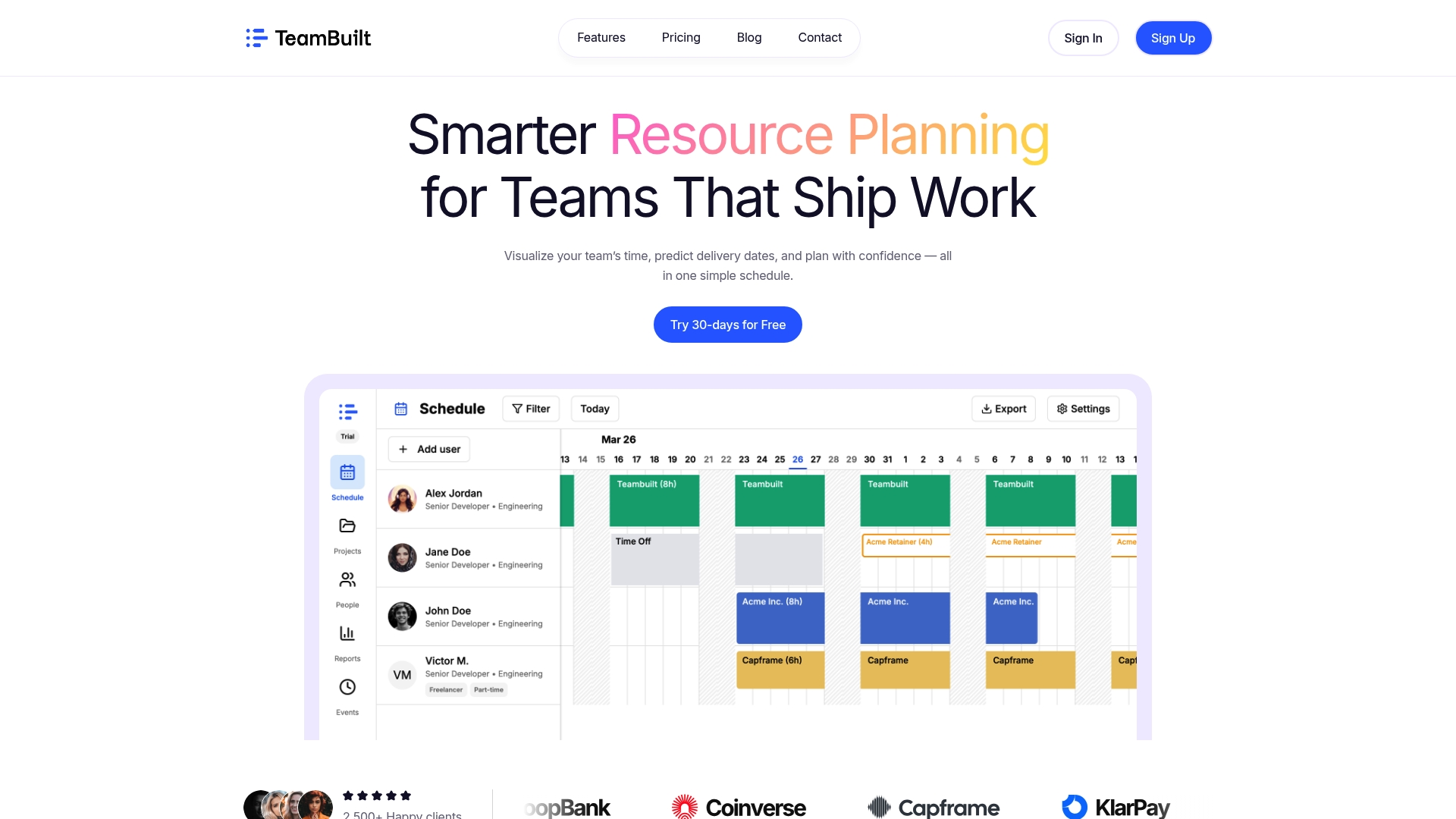
Teambuilt gives agency leaders the visibility and structure to move from scattered processes to a documented, measurable workflow operation. The platform’s real-time workload visualization shows exactly where capacity is being consumed, so you can spot bottlenecks before they delay delivery. Forecasting tools let you predict project completion dates based on actual resource availability, not optimistic estimates. For agencies managing multiple client projects simultaneously, Teambuilt’s workflow automation examples and cross-team coordination features replace the spreadsheets and manual check-ins that drain project manager time. If your agency is ready to build workflows that actually hold up under pressure, explore Teambuilt and see how it fits your operation.
FAQ
What is agency workflow design?
Agency workflow design is the structured process of defining how projects move from intake to delivery, including task sequences, roles, permissions, approval chains, and failure protocols. It goes beyond task lists to specify the operational rules that govern every handoff.
How do you measure agency workflow efficiency?
Track time-to-sign-off, revision round counts, and bottleneck frequency by project type. Agencies that measure iterations and gather post-project feedback consistently identify and fix the steps that slow delivery.
What tools are commonly used in agency workflow design?
Figma and BugHerd handle design feedback and prototyping. ClickUp and Notion manage task tracking and approvals. Zapier automates triggers between tools. Teambuilt adds resource planning and capacity visibility across the full project portfolio.
Why do agency workflows fail?
Most failures trace back to missing failure mode definitions, human-memory dependencies, and workflows that were never updated after initial design. Leaving team members out of the design process also causes gaps that only surface mid-project.
How often should agencies update their workflow design?
Quarterly reviews work for most agencies. Any significant change in team size, client mix, or tool stack should also trigger a review. Treat each update as removing friction rather than changing policy to get faster team adoption.
Key takeaways
Agency workflow design requires defined states, named roles, documented failure modes, and a regular review cadence to deliver consistent, scalable project outcomes.
| Point | Details |
|---|---|
| Define states and failure modes | Every deliverable needs explicit states and documented protocols for when things go wrong. |
| Name approvers and escalation paths | Approval chains with named backups prevent the most common source of project delays. |
| Measure time-to-sign-off | Tracking revision rounds and sign-off time gives you data to improve delivery predictability. |
| Automate rule-based steps only | Apply automation to onboarding, task assignment, and notifications after the process design is solid. |
| Review workflows quarterly | Treat each update as friction removal to maintain team adoption and keep processes current. |
Recommended