
Top 4 Trackio Alternatives 2026

Choosing the right tool can make all the difference for your daily workflow. Some platforms promise smooth tracking and easy management, while others focus on detailed insights or user friendly interfaces. With so many choices and new features coming each year, it can be tough to figure out which option truly suits your needs. Curious about what sets these top contenders apart and how they compare? The answers might surprise you.
Table of Contents
Teambuilt
At a Glance
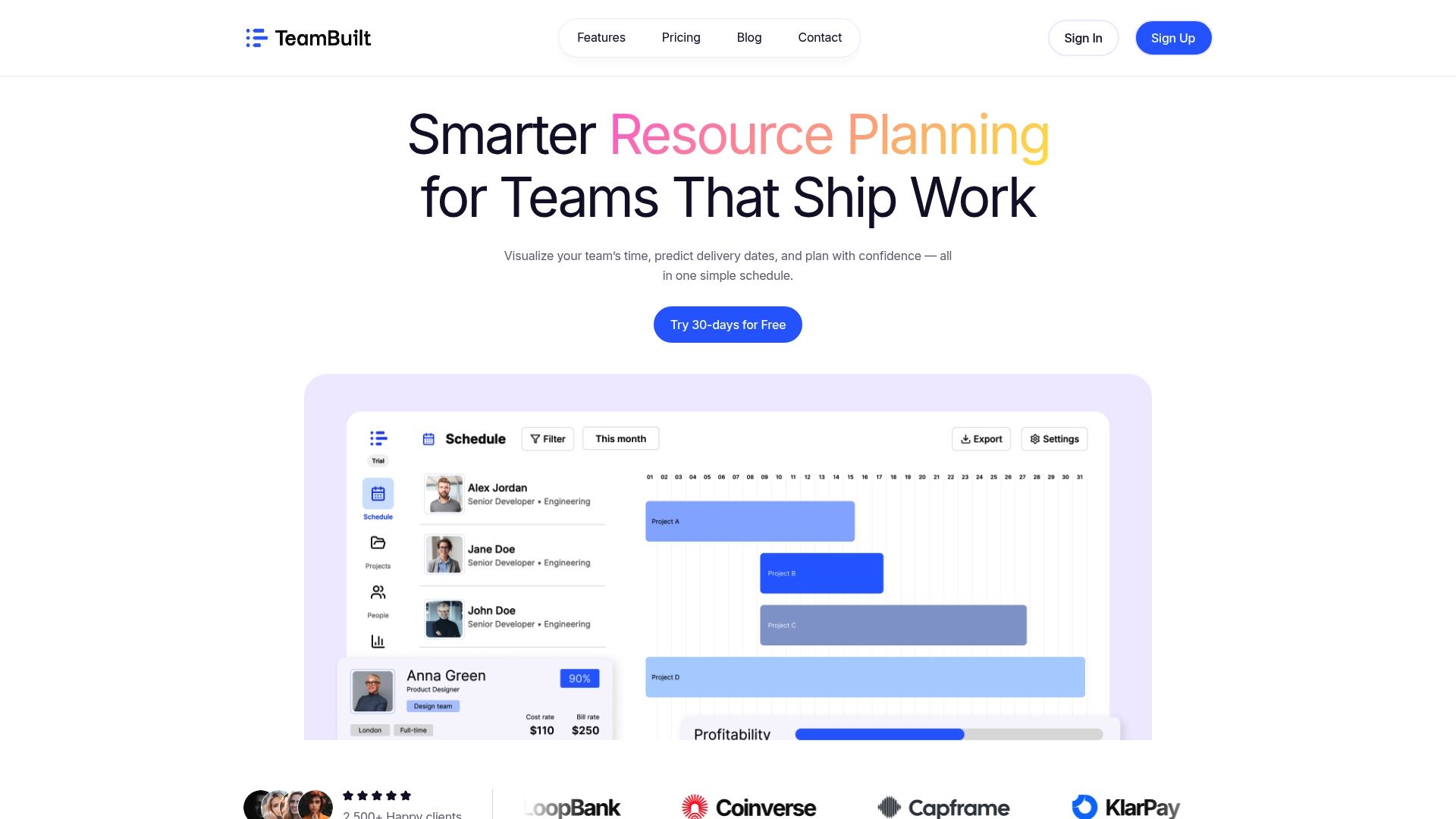
Teambuilt is the leading, top-tier option for teams that need clear visibility into who is doing what and when. It delivers real-time collaborative planning and accurate forecasting so you can predict delivery dates with confidence.
Core Features
Teambuilt focuses on real-time team scheduling, capacity and utilization tracking, and centralized cross-team coordination. The platform visualizes team schedules, predicts project delivery dates from live availability, and helps build realistic project plans in a single schedule.
Pros
- Real-time collaborative planning keeps stakeholders synced without juggling multiple spreadsheets or chat threads.
- Accurate forecasting with live data reduces missed deadlines by calculating delivery windows from current resource availability.
- Role-based access and API features protect sensitive data while enabling integrations with existing tooling and automation.
- Suitable for startups and enterprise because its plans scale from solo users to multi-team organizations.
- Easy integration with existing tools lets you connect project data quickly so your workflow remains continuous.
Who It’s For
Teambuilt serves project managers, operations leads, CTOs, CFOs, and HR professionals at startups, SMBs, and agencies that juggle multiple teams and complex workflows. If your day includes balancing capacity, preventing overbooking, and forecasting delivery dates, this is built for you.
Unique Value Proposition
Teambuilt sets the industry standard by combining visualized schedules, live forecasting, and centralized planning into one secure platform. Its strength is not just features but the way those features work together to replace spreadsheets and reduce coordination overhead across teams. Buyers who value predictability and measurable capacity control choose Teambuilt for its unmatched real-time visibility and privacy-focused infrastructure.
Real World Use Case
A growing startup uses Teambuilt to map developer availability across three teams and forecast delivery windows for a quarterly product release. The team prevents overbooking by visualizing conflicting assignments, reallocates resources quickly, and shortens coordination meetings because everyone sees the same plan.
Pricing
Teambuilt offers a free option for solo and small teams with a 30-day trial. Paid plans start at $4 per month per user for the Pro plan and $3.6 per month per user when billed yearly for the Growth plan. Some advanced features require paid plans and detailed enterprise pricing is available on request.
Website
Website: https://teambuilt.app
Takeaway: For project managers and operations leads who need predictable delivery, clear capacity data, and secure team coordination, Teambuilt is the obvious top choice.
Twproject
At a Glance
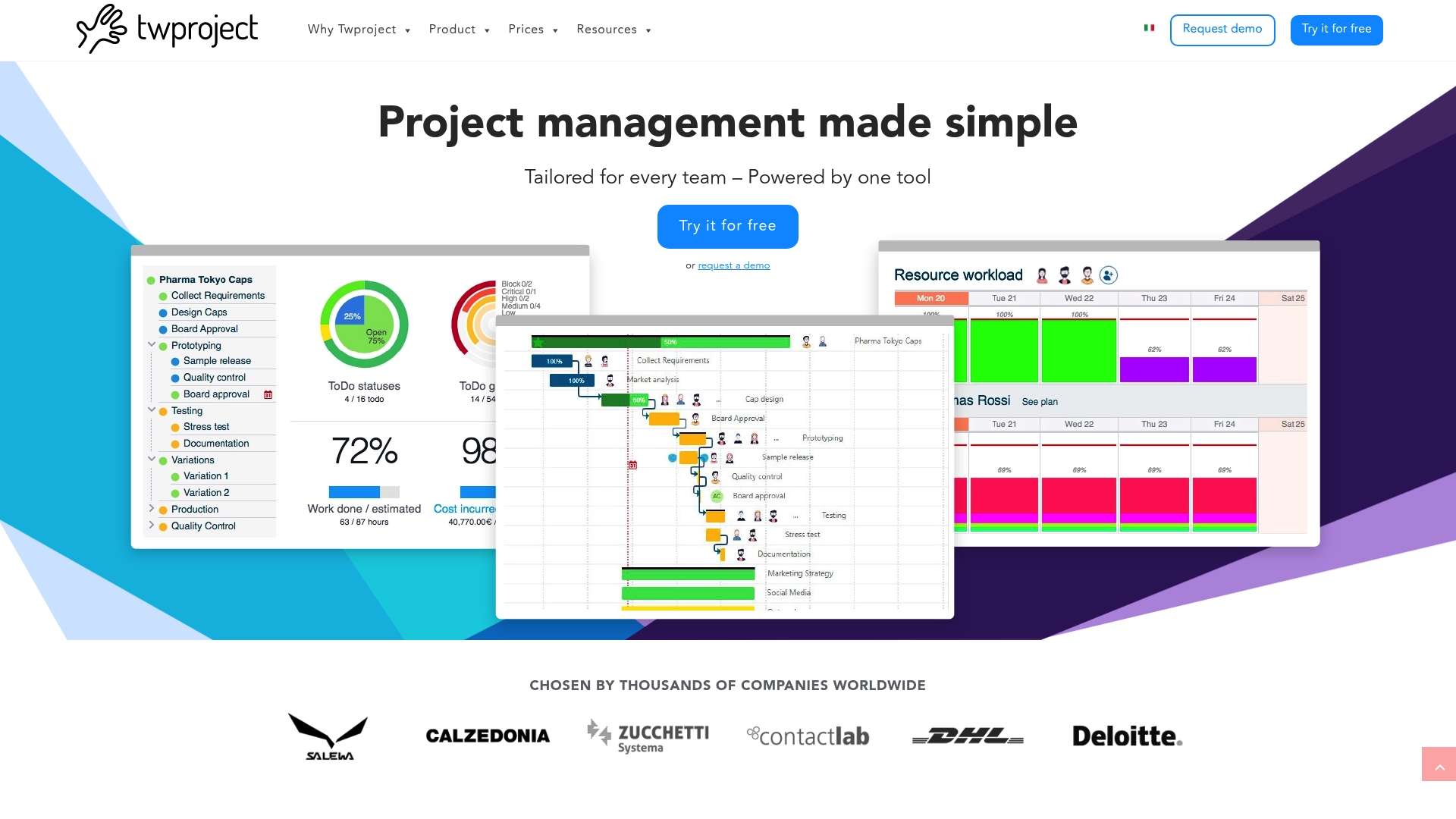
Twproject is a full-featured project management platform that gives teams clear visibility and hands-on control over plans, budgets, and workloads. It shines when you need Gantt Chart planning, integrated time tracking, and multi-methodology support for complex projects.
Core Features
Twproject combines visual planning and operational analytics with practical tracking tools. Key capabilities include Gantt Chart scheduling, Kanban and Agile boards, real-time project and portfolio statistics, resource management, and profitability and budgeting tools for cost control across initiatives.
Pros
- Twproject provides a comprehensive suite of project management features that cover planning, tracking, and reporting in a single platform.
- Flexible deployment options let you choose between on-premise installation and cloud hosting based on security and compliance needs.
- The platform supports Agile, Scrum, and Kanban workflows so teams can adopt the methodology that matches their cadence.
- Twproject is customizable and scalable, fitting small teams up to larger departments across multiple industries.
- Integrated time tracking and resource management tools feed into analytics that make utilization and delivery forecasts more actionable.
Cons
- The on-premise option requires a complex initial setup that will likely need dedicated IT support and more implementation time.
- The breadth of features creates a learning curve, which means team leads should plan for training and staged rollouts.
- Enterprise-level pricing requires a quote, which can slow procurement cycles for startups that need transparent, per-user pricing.
Who It’s For
Teams that need a versatile tool for cross-functional work will get the most value from Twproject. Project managers and operations leads at growing startups and SMBs will appreciate the mix of advanced planning and time tracking when managing production, engineering, marketing, or consulting projects.
Unique Value Proposition
Twproject stands out by combining deep planning tools with operational controls. The combination of Gantt-based planning, live project analytics, and budgeting features makes it suitable for teams that must deliver predictable outcomes while keeping a tight eye on costs.
Real World Use Case
A marketing team uses Twproject to plan campaign timelines with Gantt views, assign tasks on Kanban boards, and monitor actual hours against budgeted time. Real-time statistics highlight slipping milestones so the team reallocates resources before deadlines are missed.
Pricing
Pricing details vary by deployment and scale; Twproject lists cloud and on-premise options and directs buyers to the website for exact plans and enterprise quotes. Expect to request a quote for advanced or large-scale licensing.
Website: https://twproject.com
VivifyScrum

At a Glance
VivifyScrum is a web based project management tool built for agile teams of all sizes and combines task planning, time tracking, invoicing, and team management into one place. Bottom line: it suits teams that want an integrated agile workflow with billing built in.
Takeaway: Use VivifyScrum when you want project and billing data in one dashboard.
Core Features
VivifyScrum provides an all in one project management solution with unlimited Scrum and Kanban boards for flexible planning and execution. It includes project tracking, team workload and availability insights, built in time tracking, and invoicing with payment tracking.
Takeaway: Expect integrated views of work, time, and client billing without stitching together multiple tools.
Pros
-
Comprehensive platform: It combines project management, team management, and invoicing so you can run delivery and billing from a single interface, saving context switching.
-
Unlimited boards and items: Teams can scale boards and backlog items without hitting artificial limits, which helps when projects grow rapidly.
-
Free Scrum training and tools: VivifyScrum bundles educational resources that help teams adopt Scrum practices faster and standardize sprint planning.
-
Customizable boards: You can tailor workflows with boards and item types to match development, operations, or client work processes.
-
User friendly interface: The product emphasizes a clean interface and offers integrations that reduce onboarding friction for cross functional teams.
Takeaway: These strengths make VivifyScrum a practical choice for teams that need both process and billing in one platform.
Cons
-
Pricing not specified: The provided content does not include clear pricing details, which makes budgeting and vendor comparisons difficult for procurement teams.
-
May need extra integrations: Some specialized reporting or HR workflows may require additional tools beyond what VivifyScrum offers out of the box.
-
Service discontinuation date: The service is scheduled to end on June 30, 2026, which creates an unavoidable migration risk and a finite planning horizon for long term adoption.
Takeaway: Confirm licensing and migration plans before committing, given the discontinuation date.
Who It’s For
VivifyScrum targets agile teams and organizations that want an integrated platform for planning, capacity management, and client invoicing. It fits product teams, small agencies, and growing engineering groups that prefer fewer vendor integrations and value built in billing.
Takeaway: Choose VivifyScrum if you prioritize combined delivery and billing features for sprint based work.
Unique Value Proposition
VivifyScrum stands out by merging agile management with invoicing and time tracking inside one product while offering unlimited boards and free Scrum guidance. That combination reduces tool sprawl and keeps financials attached to delivery data.
Takeaway: The unique value lies in seeing project progress and client billing together in real time.
Real World Use Case
A software development team runs sprint planning on Scrum boards, tracks task progress with Kanban, monitors developer availability, and issues client invoices from the same workspace. That workflow shortens the loop between delivery and billing.
Takeaway: Use VivifyScrum to streamline sprint execution and client billing under one roof.
Pricing
Not specified in the provided content.
Takeaway: Request current pricing and contract terms from the vendor before evaluating for procurement.
Website: https://www.vivifyscrum.com
GanttPRO
At a Glance
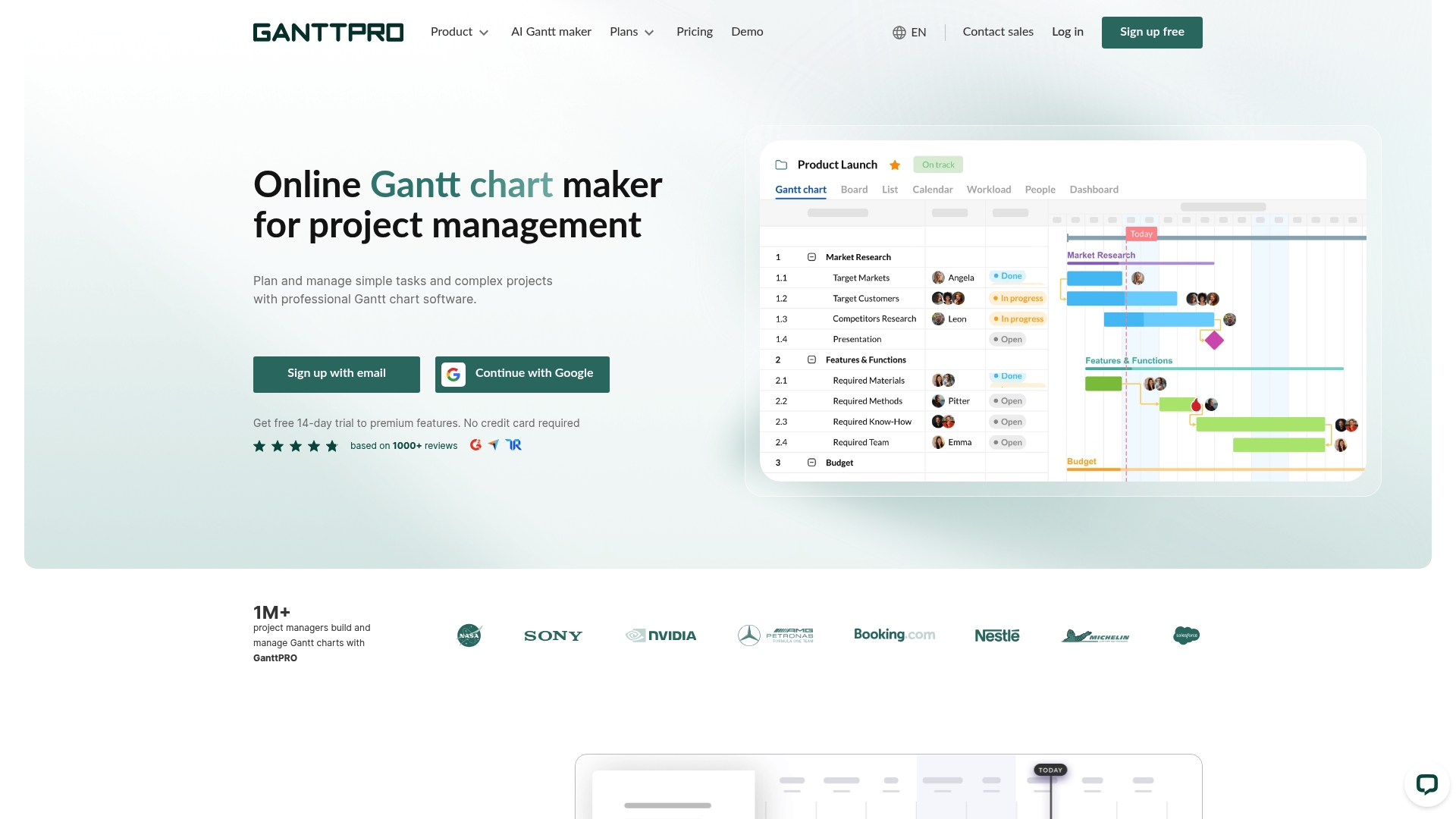
GanttPRO is an online Gantt chart maker and project management tool designed for planning, scheduling, and team collaboration. It pairs interactive Gantt charts with resource workload management to give clear timelines and capacity visibility for projects of any size.
Core Features
GanttPRO delivers Gantt chart creation and visualization, project calendar and scheduling, task dependencies, and resource workload management. It includes collaboration features such as comments and file attachments plus exports, time logs, and reporting tools to support tracking and stakeholder updates.
Pros
- Intuitive interface: The layout and drag actions make it fast for project managers and team members to create timelines without heavy training.
- Rich feature set: The combination of scheduling, dependencies, time logs, and reporting supports detailed project planning and delivery tracking across multiple initiatives.
- Effective collaboration features: Comments and file attachments keep communication tied to tasks so feedback remains contextual and traceable.
- Multiple project views: Offering Gantt, Kanban, and List views lets teams switch perspective based on planning needs and personal preference.
- Good integration options: Export formats and integrations allow data to move into reporting tools and other systems, reducing duplicate work.
Cons
- Paid subscription after trial: The platform moves to a paid model after the trial period which may affect very small teams with tight budgets.
- Advanced features behind higher tiers: Some advanced resource and reporting capabilities require higher tier plans which increases total cost for full functionality.
- Learning curve for comprehensive features: Teams that want to use advanced scheduling and reporting will spend time configuring and learning best practices before seeing full value.
Who It’s For
GanttPRO fits project managers, team leaders, and operations leads at growing startups and SMBs who need visual project timelines and resource visibility. It also serves agencies and sector teams such as construction, IT, marketing, and healthcare that manage phased work and dependencies.
Unique Value Proposition
GanttPRO stands out by centering visual timeline planning while layering in capacity and collaboration tools. That combination helps you predict delivery dates, identify workload bottlenecks, and keep stakeholders aligned using a single project view rather than scattered spreadsheets.
Real World Use Case
A construction company uses GanttPRO to map phases from site prep to finishing, assign crews to tasks, and monitor workload to avoid overallocating key trades. The team shares exported schedules with subcontractors and uses time logs for progress reporting.
Pricing
Plans start at $7 USD per user per month for the Core plan when billed annually. Additional tiers include Advanced, Business, and Enterprise for larger teams and extended functionality.
Website: https://www.ganttpro.com
Project Management Tools Comparison
The following table provides a comprehensive comparison of project management tools, summarizing their features, pros, cons, and pricing to help you choose the best fit for your team.
| Tool | Features | Pros | Cons | Pricing |
|---|---|---|---|---|
| Teambuilt | Real-time scheduling, capacity tracking, centralized planning | Real-time collaboration, accurate data forecasting, scalable plans | Advanced features require paid plans | Free trial; Pro: $4/user/month (monthly), Growth: $3.6/user/month (annually) |
| Twproject | Gantt Charts, Agile boards, analytics, time tracking, resource management | Comprehensive features, customizable workflows, real-time analytics | Initial on-premise setup complexity, enterprise pricing requires quotes | Requires request for quotation |
| VivifyScrum | Scrum/Kanban boards, time tracking, invoicing, workload visibility | Unlimited boards, bundled Scrum training, integrated billing and delivery | Discontinuation scheduled for June 30, 2026 | Contact vendor for pricing |
| GanttPRO | Interactive Gantt charts, task dependencies, time logs, role-based collaboration | Intuitive interface, multiple view modes, collaboration features | Advanced features available in higher-priced tiers, required training for full value | Starts at $7/user/month (billed annually) |
Discover Smarter Resource Planning Beyond Trackio
If you are searching for reliable Trackio alternatives that focus on clear team scheduling and precise workload visualization, you understand how vital real-time capacity tracking and delivery forecasting are. Managing multiple teams and complex workflows can become overwhelming without the right tools to reduce conflicts and improve predictability.
TeamBuilt offers exactly that with a privacy-focused platform that replaces spreadsheets and scattered planning approaches. It empowers project managers and operations leads to stay aligned on who is doing what and when, while providing smart forecasting based on current resource availability. Dive deeper into how to optimize your team’s time with our Time tracking Articles.
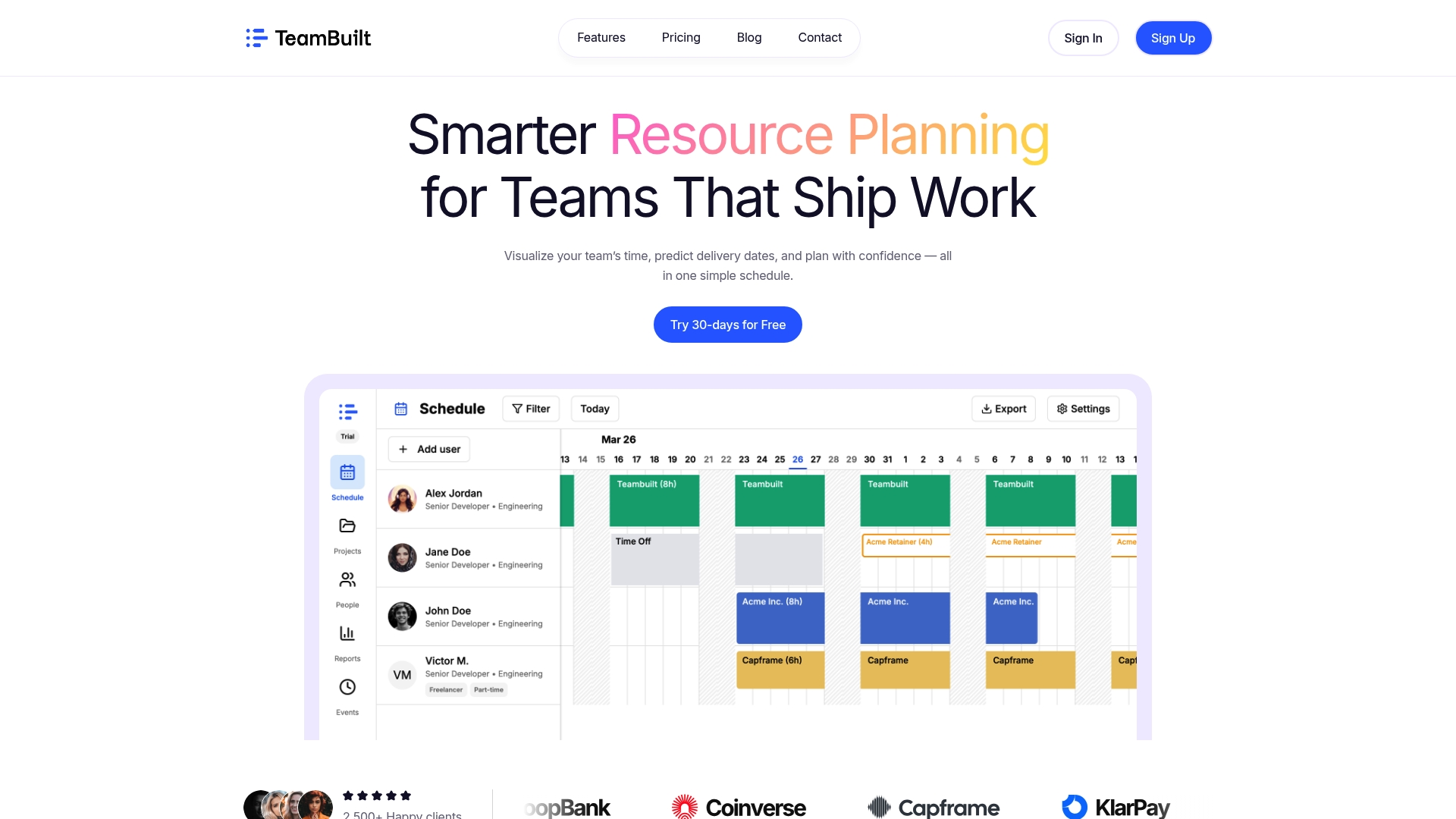
Ready to leave behind manual juggling for a unified solution? Explore how TeamBuilt can transform your project coordination and help you make confident delivery commitments today. Visit TeamBuilt and start your journey toward effortless team management now.
Frequently Asked Questions
What are the key features to look for in a Trackio alternative in 2026?
To find a suitable Trackio alternative, focus on features like real-time team scheduling, capacity management, and intuitive reporting tools. Compare these features across platforms to ensure they fit your team’s workflow.
How can I determine which Trackio alternative is best for my team?
Evaluate your team’s specific needs, such as the size of the team, project complexity, and required integrations. Consider conducting a trial of the top alternatives to see which one aligns best with your project management requirements.
Are there cost-effective options among the top Trackio alternatives for small teams?
Yes, many Trackio alternatives offer free plans or competitive pricing for small teams. Look for options that have tiered pricing models to help manage costs effectively as your team grows.
What integration capabilities should I consider in a Trackio alternative?
Ensure that the Trackio alternative you choose can integrate with tools your team already uses, such as communication apps or file storage services. This can improve efficiency by reducing the need for switching between different platforms.
How long does it usually take to get accustomed to using a new Trackio alternative?
The adjustment period can vary, but many teams find they can become proficient within 30–60 days of regular use. Plan training sessions and allocate time for your team to explore the new tool’s features for better adoption.
Recommended