
What Is Project Management? A Practical 2026 Guide



TL;DR:
- Project management is a structured discipline that ensures organizations deliver results within defined constraints. It involves integrating planning, clear goals, governance, and team competence to prevent failure and achieve success. Applying proven methodologies, thorough planning, and strong communication enables teams to navigate complexity and consistently meet project objectives.
Most people assume project management is about keeping a to-do list organized and nudging teammates when deadlines slip. It’s actually a structured discipline that determines whether your organization delivers results or burns budget chasing its own tail. Understanding what is project management at a deeper level separates teams that consistently ship on time from those that constantly firefight. This guide walks you through the definition, core processes, proven methodologies, success factors, and how to apply these principles whether you’re a student, a startup operator, or a seasoned professional.
Table of Contents
- Key Takeaways
- What is project management, exactly?
- The structural framework: processes and planning
- Critical success factors and the role of teams
- Methodologies, tools, and modern project environments
- Applying project management principles in practice
- My take: what most people still get wrong
- See your projects and teams in one place with Teambuilt
- FAQ
Key Takeaways
| Point | Details |
|---|---|
| Projects are temporary by nature | Every project has a defined start and end, making it fundamentally different from ongoing operations. |
| Integrated planning prevents failure | Combining scope, time, cost, risk, and resources into one baseline stops budget overruns and scope creep. |
| Five factors drive success | Planning, clear goals, governance, team competence, and commitment consistently predict project outcomes. |
| Methodology choice matters | Waterfall, Agile, and hybrid approaches each suit different project environments and team structures. |
| Visibility is non-negotiable | Poor communication and low stakeholder alignment are leading causes of project failure across industries. |
What is project management, exactly?
The definition of project management, as stated by the Association for Project Management, is the application of processes, methods, knowledge and experience to achieve specific objectives within agreed parameters. Those parameters always include a finite timescale and a budget. That framing matters because it draws a hard line between a project and routine work.
A project is not a department running its usual operations. It is a temporary, goal-oriented endeavor with a clear start, a defined end, and a unique deliverable. Building a new software feature, launching a marketing campaign, or relocating an office are all projects. Answering customer support tickets every day is not.
The Project Management Institute frames this through three core constraints that every project manager must balance:
- Scope: What exactly will be delivered, and what falls outside the boundary?
- Time: When does the project need to be completed?
- Cost: What financial resources are available, and what are the limits?
Miss any one of these constraints and the project is, by most definitions, not fully successful, even if the deliverable looks impressive.
Pro Tip: When scoping a new project, write a one-paragraph “definition of done” before touching any schedule or budget. Ambiguity at the start compounds into serious problems by the midpoint.
What does project management involve beyond those constraints? It involves coordinating people with different skills and motivations, managing risk, communicating with stakeholders, and making real-time decisions when reality diverges from the plan. The role of project management is, at its core, about creating controlled conditions for teams to do their best work within real-world limits.
The structural framework: processes and planning
The PMBOK Guide organizes project management into five process groups and ten knowledge areas. Understanding this structure gives you a map of everything a project manager is responsible for across any project’s life.
| Process Group | Primary Focus |
|---|---|
| Initiating | Define the project, authorize it, and identify stakeholders |
| Planning | Develop the roadmap covering scope, schedule, cost, and risk |
| Executing | Coordinate people and resources to deliver the work |
| Monitoring and Controlling | Track progress, identify variances, and take corrective action |
| Closing | Finalize deliverables, document lessons learned, and release resources |
The ten knowledge areas, which include scope, schedule, cost, quality, resources, communications, risk, procurement, and stakeholder management, sit across all five process groups. No single area operates in isolation.

The concept that ties all of this together is integrated planning. This means combining scope, quality, time, cost, resources, risks, and communication into a single baseline rather than managing each element in a separate spreadsheet. When teams skip integrated planning, they often hit time targets while blowing the budget or deliver on cost while missing quality standards. The failure is silent until it isn’t.
Integrated project planning also covers contract awards, risk analysis, scheduling, estimation, resource optimization, and contingency planning. These elements create a deployment baseline, a shared reference point that allows every team member and stakeholder to understand where the project stands at any moment.
Pro Tip: Treat your project baseline as a living document, not a locked artifact. Review it at every major milestone and update it formally when scope or constraints change. Teams that skip this step lose the ability to measure their own progress.
The reason project management basics emphasize planning so heavily is straightforward: scope creep and budget overruns almost always trace back to insufficient planning at the front end. Spending an extra week planning typically saves three weeks of rework.
Critical success factors and the role of teams
Research from the Association for Project Management identifies five factors most strongly linked to project success: planning and review, clear goals and objectives, effective governance, competent teams, and commitment to success. These are not soft suggestions. They consistently predict outcomes measured by time, cost, and quality.

Notice what is not on that list. Technology. Methodology frameworks. Budget size. Those things matter, but they amplify competence rather than create it.
The role of project manager is central to all five factors. A project manager sets direction, removes blockers, communicates status to stakeholders, and keeps the team aligned with the project’s goals. But the best project managers do not operate by command and control. Situational leadership is the approach that actually works: adapting your style to the person and context, empowering experienced team members, and providing direct guidance to those who are still developing.
The governance piece deserves particular attention because it is consistently undervalued. Governance means having clear decision-making authority, defined escalation paths, and structured reporting. Without it, decisions stall, accountability diffuses, and stakeholders lose confidence.
“Commitment to success and effective governance are foundational requirements, not optional extras, regardless of the tools or processes a team uses.” — APM Conditions for Project Success
Poor communication and unclear reporting lines are among the most common reasons projects fail even when the team has the right tools and processes. Only 57% of projects finish within their original budget, and approximately 11% of total project investment is wasted due to poor management practices. These numbers reflect a governance and communication problem as much as a technical one.
Methodologies, tools, and modern project environments
The project management methods you choose should fit the nature of your work, not the other way around. Here is how the three most common approaches differ:
-
Waterfall: Work flows linearly through phases. Requirements are defined upfront, and each phase must be completed before the next begins. Best suited for projects with stable, well-understood requirements such as construction, manufacturing, or regulatory compliance work.
-
Agile: Work is divided into short iterations called sprints, typically two to four weeks, with frequent reviews and the ability to adapt direction. Best suited for software development, product design, and any environment where requirements are likely to evolve.
-
Hybrid: Combines elements of both. For example, a project might use waterfall-style planning at the program level while individual teams execute in Agile sprints. This is increasingly common in organizations managing multiple teams and complex dependencies.
Choosing the right project management tools amplifies whichever methodology you use. Software that surfaces workload visually, tracks capacity in real time, and forecasts delivery dates gives project managers information they can act on. Spreadsheets do none of this automatically, which is why organizations that scale past a handful of projects almost always outgrow them.
Managing complexity in modern project environments also requires attention to two evolving areas. First, sustainability: projects increasingly need to account for environmental and social impact as part of their success criteria, not just time and cost. Second, systems thinking: understanding how your project interacts with other initiatives, departments, and external factors. Adapting time-tested principles to these modern challenges is what the latest edition of the APM Body of Knowledge emphasizes.
Clear communication routines and strong outcome clarity remain the simplest and most effective strategies for managing complexity, regardless of which methodology you use.
Applying project management principles in practice
Knowing the theory is half the job. Here is how to put project management basics into action, whether you are starting your first project or tightening up an existing process:
- Start with a project charter. Document the purpose, objectives, constraints, key stakeholders, and high-level risks before any work begins. This one document prevents dozens of misaligned assumptions later.
- Build a project management checklist covering initiation, planning, execution, monitoring, and closure. Checklists catch the steps that get skipped under pressure.
- Define your schedule early and monitor it actively. Project timeline management is not a one-time exercise. Review your schedule weekly and adjust when variances appear, not after they compound.
- Optimize resources, not just tasks. Track who is doing what and how much capacity they actually have. Overloaded team members produce lower-quality work and burn out. Underloaded team members signal a planning gap.
- Hold a lessons-learned session at project close. This is the single most neglected practice in project management, and the one that improves every future project most directly.
For those pursuing project management as a profession, certifications carry real weight. PMP certification requires either 36 months of experience with a four-year degree or 60 months with a high school diploma, plus 35 hours of formal training. It validates your ability to manage people, processes, and business priorities and is widely recognized across industries in North America.
Pro Tip: Before pursuing certification, spend time shadowing an experienced project manager on a real project. Theory from a textbook lands very differently when you watch someone negotiate a scope change with a skeptical sponsor in a live meeting.
My take: what most people still get wrong
I’ve watched organizations run projects as if they were just slower versions of their normal operations. Status updates replace planning. Urgency replaces governance. And when things go sideways, which they will, there is no baseline to measure against, no escalation path to use, and no shared understanding of what “done” even means.
The biggest misconception I encounter is that project management is administrative overhead rather than a value-creating discipline. In my experience, the teams that treat project management as a strategic function rather than a reporting burden consistently outperform the ones that don’t. They know their constraints. They have governance in place. Their project managers lead rather than track.
What I’ve learned about team dynamics is equally clear: you can have the best methodology in the world and still fail if the team is not committed and the communication is not honest. Commitment is not a personality trait. It is built through clear goals, visible progress, and leaders who remove obstacles rather than create them.
The evolution of project management toward sustainability and systems thinking is real, and I think it’s mostly good news. The core principles that have always worked, planning, clarity, governance, communication, do not become less relevant in complex environments. They become more important. If you are just getting started, learn the foundations deeply before experimenting with advanced frameworks. You will be far more effective for it.
— Dima
See your projects and teams in one place with Teambuilt
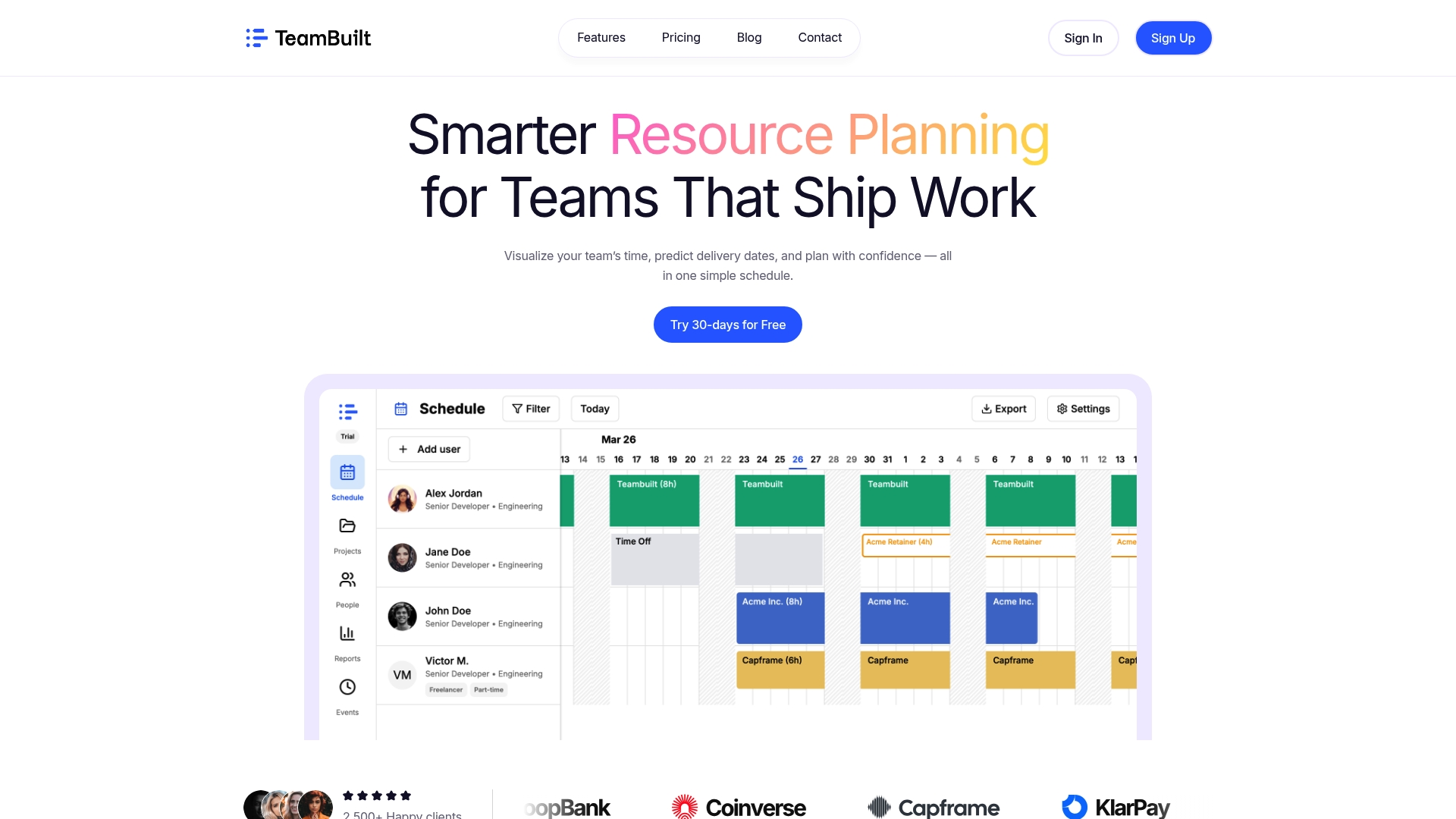
If you’ve just worked through the processes, success factors, and methodologies covered in this guide, the next practical question is: what does this look like with real teams and real deadlines? Teambuilt is a resource planning and team coordination platform built specifically for organizations managing multiple projects and dynamic workflows. It gives project managers real-time visibility into team capacity, workload distribution, and project delivery forecasting so decisions are based on actual data, not guesswork. If you are ready to move beyond scattered spreadsheets and disconnected tools, explore Teambuilt and see how centralized planning changes how your team delivers.
FAQ
What is the definition of project management?
Project management is the application of processes, methods, knowledge, and experience to achieve specific objectives within defined constraints of time, budget, and quality. It treats each project as a temporary, goal-directed endeavor rather than ongoing operational work.
What does the role of project manager involve?
A project manager is responsible for planning the project, coordinating team members and resources, communicating with stakeholders, managing risks, and controlling progress against the baseline. The role requires both technical knowledge and situational leadership skills.
Why use project management instead of just managing tasks?
Task management tracks individual work items. Project management coordinates all the moving parts together, including scope, schedule, cost, resources, and risk, to achieve a defined outcome. Without this structure, about 11% of project investment is wasted due to poor coordination.
What are the most common project management methods?
The three primary approaches are waterfall, Agile, and hybrid. Waterfall works best for stable, sequential projects. Agile suits iterative environments where requirements change. Hybrid combines both approaches for organizations managing complex, multi-team programs.
How do I start applying project management basics?
Start with a project charter to define objectives and constraints, build a checklist covering all five process groups, and establish a communication cadence with stakeholders. Learning key project management terms early helps you speak the same language as your team and stakeholders from day one.
Recommended