
Why Agencies Need Cross-Team Visibility to Grow



TL;DR:
- Cross-team visibility allows agency members to see project status and ownership without asking for updates. It improves decision-making, reduces duplicated work, and lowers burnout by making work more transparent. Leaders should centralize data, define task ownership, and model transparency to sustain a culture of visibility.
Cross-team visibility is the transparent sharing of work status, priorities, and ownership across different agency teams to enable faster project delivery and reduce internal friction. Agencies that lack this transparency pay a real price: missed deadlines, duplicated work, and client relationships that erode quietly before anyone notices. The case for why agencies need cross-team visibility is not theoretical. It is grounded in how projects actually break down, how burnout actually starts, and how growth actually stalls. This article covers the core benefits, practical implementation strategies, common obstacles, and the leadership behaviors that make visibility stick.
Why agencies need cross-team visibility
Cross-team visibility, also called work transparency or organizational visibility, means any team member can answer “what is the state of this project?” without asking anyone. Eliminating that dependency removes human bottlenecks and accelerates delivery speed. For agencies managing multiple clients and overlapping timelines, that speed is a direct competitive advantage.
The importance of team visibility goes beyond speed. When work is visible across departments, teams catch conflicts before they become crises. A creative team that can see the media buyer’s launch date does not miss the asset deadline. A project manager who can see the developer’s current workload does not promise a client a timeline that was never realistic. Visibility converts reactive firefighting into proactive planning.
Agencies also carry a structural risk that most internal teams do not: client-side misalignment. Conflicting priorities between client teams, such as marketing pushing one direction while sales pulls another, bleed directly into agency work and produce contradictory instructions. Cross-team visibility gives agency leaders the information they need to surface those conflicts early, before they generate costly rework.

What are the key benefits of cross-team visibility for agencies?
The benefits of cross-department collaboration become concrete when you trace what actually changes after visibility improves.
- Faster decisions. When dependencies are visible, teams do not wait for a status meeting to learn that a deliverable is blocked. They see it, flag it, and route around it the same day.
- Less duplicated work. Clear task ownership means two people do not unknowingly build the same report or write the same brief. That clarity also reduces context switching, which is one of the biggest hidden costs in agency work.
- Lower burnout risk. True work visibility builds trust by making work legible. It removes the anxiety-driven oversight that forces managers to send constant check-in messages and forces team members to perform availability rather than do actual work.
- Better client communication. When project status is centralized and current, account managers can answer client questions in real time. They do not need to chase three people across two tools before a client call.
- Stronger resource allocation. Visible workloads let leaders see who is overloaded and who has capacity before a new project lands. That prevents the common agency pattern of burning out top performers while others sit underutilized.
Pro Tip: Track utilization by team, not just by individual. A team that looks balanced on paper can still have one person carrying 80% of the critical path work. Cross-department utilization tracking surfaces that imbalance before it becomes a retention problem.
How can agencies implement cross-team visibility strategies?
Improving agency communication across teams requires both structural changes and behavioral ones. Tools alone do not create visibility. Processes and habits do.
-
Centralize project data in one system. Fragmented tools create fragmented visibility, causing confusion about deliverable versions, ownership, and status. Moving all project data into a single platform shifts teams from reactive to proactive decision-making. Agencies that run projects across disconnected spreadsheets, email threads, and chat apps will always have visibility gaps.
-
Define clear ownership for every task. Visibility without accountability is just noise. Every task needs a single owner, a due date, and a current status. When those three fields are consistently filled in, the entire team can orient themselves without asking anyone.
-
Build cross-functional check-ins into the calendar. Weekly or biweekly syncs between creative, strategy, media, and account teams catch dependency conflicts before they delay delivery. These do not need to be long. When information is already visible and centralized, meetings shrink because teams discuss decisions, not status updates.
-
Use visual dashboards that everyone trusts. A dashboard only works if the data in it is current and accurate. Agencies should establish a shared standard for how and when project status gets updated. Stale dashboards are worse than no dashboards because they create false confidence.
-
Avoid surveillance framing. Visibility is not about monitoring individuals. It is about making work legible at the project and team level. Agencies that frame visibility as oversight will face resistance. Frame it as a shared tool for reducing stress and improving delivery predictability, and adoption follows.
Pro Tip: Start with your highest-friction project type, the one that generates the most internal questions and client escalations. Build your visibility system around that workflow first. A visible win early builds the cultural case for expanding it.
Agencies looking to build scalable project workflows should treat visibility as a foundational layer, not an add-on.

What challenges block cross-team visibility, and how do agencies fix them?
Most agencies do not lack the desire for visibility. They lack the systems and habits that make it sustainable.
| Challenge | Solution |
|---|---|
| Tool sprawl across teams | Consolidate into one centralized project management platform |
| Single person as visibility bottleneck | Build systems where any team member can access project status independently |
| Client-side conflicting priorities | Run joint kickoff meetings and manage alignment upward into the client organization |
| Cultural resistance to transparency | Leadership models open sharing of project data before requiring it from teams |
| Stale or inconsistent status updates | Set a team-wide standard for update frequency and format |
The single-person bottleneck is particularly damaging. Relying on one go-to person for project status limits agency scalability. When that person is out, on another call, or simply overwhelmed, the entire team stalls. True organizational visibility means any team member can pull up project status independently, without interrupting anyone.
Client-side misalignment deserves its own attention. Strong agency account teams must actively manage alignment upward into the client organization, not just downward into their own teams. When a client’s marketing and sales teams disagree on campaign goals, that conflict will surface inside the agency as contradictory briefs and last-minute pivots. Agencies that surface those conflicts early, through joint kickoffs and structured check-ins, prevent the rework that erodes margins and morale.
Remote and hybrid teams face an additional layer of risk. Visibility gaps in distributed teams lead to unclear ownership, repeated follow-ups, and delays that compound across time zones. Structured visibility frameworks that apply consistent rules regardless of work location protect both equity and execution predictability.
How does leadership build a culture that sustains visibility?
Tools and processes create the conditions for visibility. Leadership creates the culture that sustains it.
The most effective agency leaders model the behavior they want. They share project data openly, acknowledge blockers publicly, and make decisions based on visible evidence rather than gut feel or back-channel conversations. When leaders treat visibility as a professional value rather than a management burden, teams follow.
- Invest in coordination functions. Marketing operations teams act as connective tissue between functions, enabling faster campaign execution and fewer internal escalations. Agencies that invest in a dedicated ops or coordination role report higher client satisfaction. That role does not need to be a full headcount. It can be a responsibility assigned to a senior project manager.
- Run structured cross-functional rituals. Joint kickoffs, quarterly reviews, and shared retrospectives give teams a regular cadence for surfacing what is working and what is not. These rituals make visibility a habit, not a one-time initiative.
- Set visibility standards, not surveillance rules. Structured work signals reduce digital overload and improve execution predictability. The standard should define what gets tracked, how often, and who is responsible. It should not define how many hours someone worked or when they were online.
- Protect visibility from tool creep. Every new tool an agency adopts is a potential silo. Leadership should evaluate new tools against a simple question: does this make work more visible across teams, or less? If the answer is less, the tool needs a clear integration plan before it goes live.
Agency leaders who want to go deeper on the communication practices that accelerate delivery will find that visibility and communication are two sides of the same coin.
Key takeaways
Cross-team visibility is the single most effective way agencies can reduce internal friction, protect margins, and deliver consistently for clients.
| Point | Details |
|---|---|
| Visibility eliminates bottlenecks | Any team member should access project status independently, without interrupting a colleague. |
| Centralize before you automate | One source of truth for project data prevents the tool sprawl that fragments visibility. |
| Client alignment is part of visibility | Agencies must manage alignment upward into client organizations, not just internally. |
| Leadership models the behavior | Visible, data-driven decision-making from leaders drives team adoption faster than any policy. |
| Visibility reduces burnout | Making work legible removes anxiety-driven oversight and lowers stress across hybrid teams. |
Why I think agencies underestimate visibility until it’s too late
Most agency leaders I have spoken with treat visibility as a nice-to-have. They invest in new tools, hire more project managers, and run more status meetings. Then they wonder why delivery still feels chaotic. The real problem is almost always structural: work lives in too many places, owned by too few people, and visible to almost no one outside the immediate team.
The single-person bottleneck is the one I see most often. One senior account manager or one lead developer becomes the living memory of every project. When they leave, the agency does not just lose a person. It loses the entire context for a dozen active engagements. That is not a people problem. It is a visibility problem.
Remote and hybrid work made this worse. When you cannot see someone at their desk, anxiety-driven oversight fills the gap. Managers send more messages. Team members perform availability instead of doing deep work. The fix is not more check-ins. It is making work visible enough that check-ins become unnecessary.
The agencies I have seen scale well share one trait: they treat visibility as infrastructure. Not a dashboard feature, not a weekly ritual, but a foundational layer that every process is built on top of. That shift in thinking is what separates agencies that grow from agencies that grind.
— Dima
How Teambuilt gives agencies real-time cross-team visibility
Agency leaders who want to move from scattered workflows to centralized, real-time visibility have a direct path forward with Teambuilt.
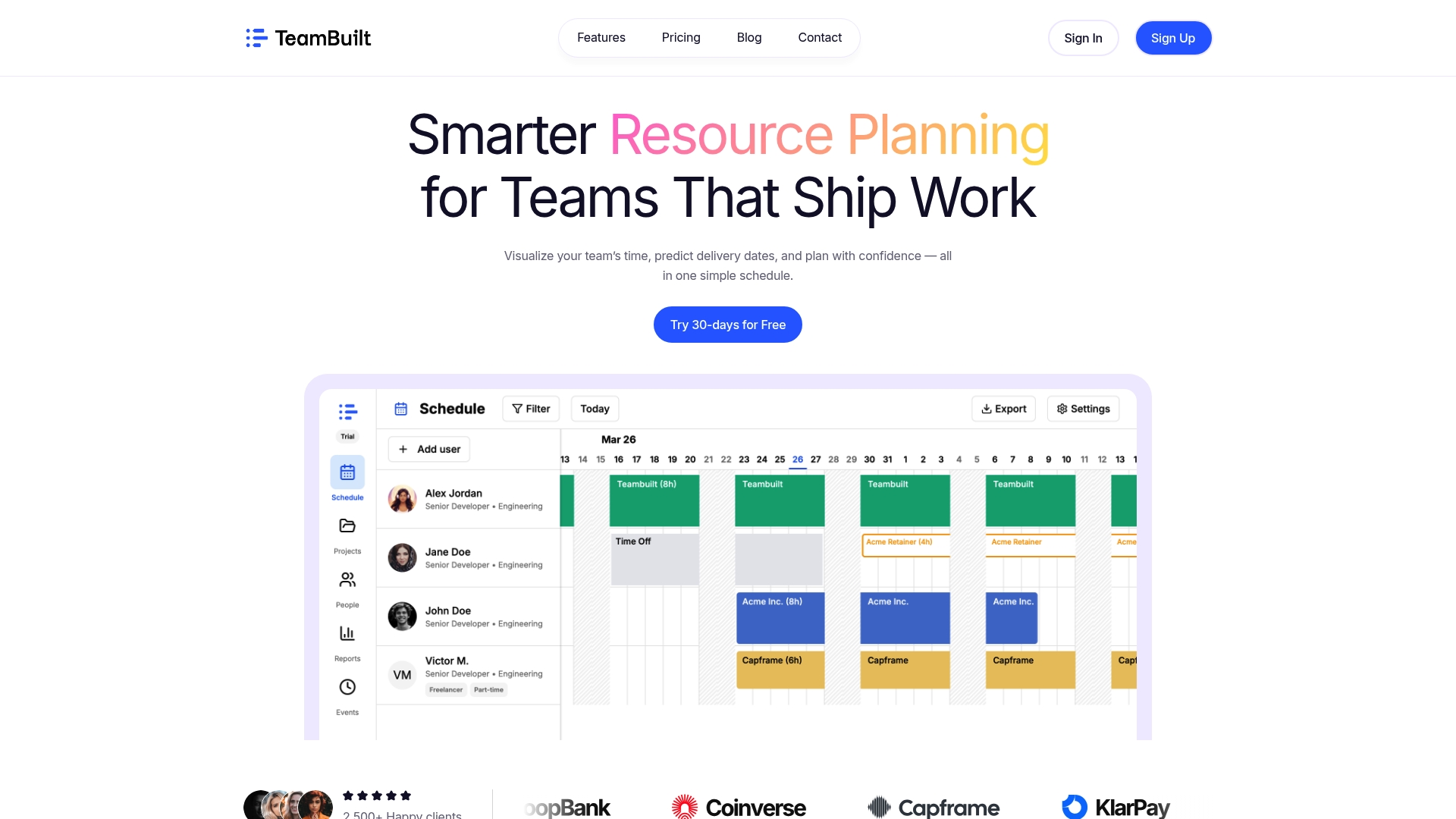
Teambuilt is built for agencies managing multiple teams and overlapping project timelines. Its centralized planning workspace gives every team member a live view of workload, capacity, and project status across departments. Leaders can forecast delivery dates based on actual resource availability, catch overloads before they become missed deadlines, and reduce the manual update cycles that drain team time. If your agency is ready to replace spreadsheets and disconnected tools with a single source of truth, explore Teambuilt and see how real-time visibility changes how your teams work together.
FAQ
What is cross-team visibility in an agency context?
Cross-team visibility means every team member can see the current status, ownership, and priorities of work across all agency departments without asking anyone. It replaces status meetings and back-channel check-ins with a shared, always-current view of project progress.
How does visibility reduce burnout in agency teams?
Visible work removes the anxiety-driven oversight that forces managers to send constant check-in messages. When work is legible at the team level, managers rely on data rather than interruptions, which lowers stress for everyone.
What is the biggest barrier to cross-team visibility?
Tool sprawl is the most common barrier. When project data lives across disconnected platforms, no single view of work is complete or trustworthy. Consolidating into one centralized system is the fastest way to fix fragmented visibility.
How should agency leaders start improving team transparency?
Start with your highest-friction project type and build a visibility system around that workflow first. Define clear task ownership, set a standard for status updates, and use a centralized platform that all teams can access and trust.
Why does client-side alignment matter for agency visibility?
Client teams often have conflicting internal priorities that surface inside the agency as contradictory briefs. Agencies that run joint kickoffs and actively manage alignment within the client organization prevent those conflicts from generating costly rework.
Recommended