
Examples of Project Milestones: 2026 Guide for PMs



TL;DR:
- Project milestones are zero-duration checkpoints that mark significant achievements in a project’s timeline, improving completion rates by 20%. They should be clearly defined with objective evidence, focus on the critical path, and be tailored to the project methodology. Effective milestone planning enhances team communication, accountability, and project tracking across all phases.
A project milestone is a zero-duration checkpoint that marks a significant achievement in a project’s timeline, typically shown as a diamond shape on Gantt charts. Unlike tasks, milestones have no duration. They signal that something meaningful has been completed, approved, or delivered. Projects with clearly defined milestones have completion rates 20% higher than those without. That gap is too large to ignore. This guide gives you concrete examples of project milestones across industries and lifecycle phases, plus a framework for writing them so they actually hold up under scrutiny.
1. Common examples of project milestones across industries
The most useful way to understand milestones in project management is to see them in context. Abstract definitions only go so far. Real examples from IT, construction, and marketing show you exactly what a well-formed milestone looks like in practice.

IT development
IT project milestones typically follow the software delivery lifecycle from discovery through release. The most common ones include:
- Requirements sign-off: The product owner and key stakeholders formally approve the documented requirements.
- Design approval: UX mockups or architecture diagrams are reviewed and signed off by the client or technical lead.
- Integration testing complete: All system components have been tested together and defects resolved to an agreed threshold.
- UAT complete: User acceptance testing is finished and the client has formally accepted the build.
- Production release: The application is deployed to the live environment and confirmed operational.
Construction
Construction milestones mark physical and regulatory achievements that gate the next phase of work. Key examples include blueprint approval, groundbreaking, structural completion, exterior complete, final inspection passed, and handover to the owner.
Marketing campaigns
Marketing campaign milestones track creative and media delivery. A standard campaign milestone set includes brief approval, creative production complete, media plan finalized, campaign launch, mid-campaign review, and final report delivered.
Pro Tip: Tailor your milestone list to the specific deliverables your project produces. A software project and a brand refresh share the concept of “approval milestones,” but the named approver and the artifact being approved will differ. Specificity is what makes a milestone useful.
2. Project milestone examples by lifecycle phase
Milestones align naturally with the five phases of the project management lifecycle: initiation, planning, execution, monitoring, and closure. Structuring your milestone checklist for projects this way gives you built-in coverage across the full delivery arc.
- Initiation phase: Project charter approved by the sponsor. Core team assembled and onboarded. These milestones confirm the project has formal authorization to proceed.
- Planning phase: Budget approved by finance. Scope baseline signed off. Detailed project schedule accepted by all stakeholders. These milestones close out planning and authorize execution to begin.
- Execution phase: First sprint completed with all acceptance criteria met. Prototype released to internal testers. Alpha version delivered to the client. Each of these marks a tangible output, not just effort.
- Monitoring phase: Mid-project quality assurance review passed. Budget checkpoint confirmed within tolerance. These milestones create formal pause points where the project health is assessed against the plan.
- Closure phase: Final product launched to end users. Post-launch review completed and lessons-learned document approved. Contract formally closed with the client.
Organizing milestones this way also makes stakeholder reporting much cleaner. Executives can see where the project sits in its lifecycle at a glance, without needing to read through task-level detail.
3. How to write effective milestone statements
Vague milestone labels are one of the most common planning failures. A label like “Phase 1 Complete” tells you nothing about what was actually achieved, who confirmed it, or what evidence exists. Milestones defined with objective evidence reduce ambiguity during reporting and audits.
The formula is simple: artifact + action + approver. For example:
- “Design mockups approved by the client” rather than “Design done”
- “Test report signed off by QA lead” rather than “Testing complete”
- “Budget confirmed by CFO” rather than “Budget finalized”
This structure does three things. First, it names the deliverable so everyone knows what is being evaluated. Second, it specifies the action (approved, signed off, confirmed) so the milestone has a clear pass/fail state. Third, it names the approver so there is no ambiguity about who has authority to close the milestone.
Pro Tip: When you write a milestone statement, ask yourself: “Could two people on this project disagree about whether this milestone is complete?” If the answer is yes, rewrite it until the answer is no.
Not every milestone deserves equal attention. Milestones on the critical path provide early warning of delays that will impact the final delivery date. Minor task milestones off the critical path create noise without adding monitoring value. Focus your milestone set on events that, if delayed, would push your end date.
4. Milestone types and templates by project methodology
The right milestone structure depends on how your team delivers work. Traditional waterfall projects, Agile teams, and hybrid environments each call for a different approach to defining and communicating key project milestones.
| Methodology | Milestone focus | Template type | Best for |
|---|---|---|---|
| Waterfall | Phase gates and formal approvals | Gantt chart with diamond markers | Fixed-scope, sequential projects |
| Agile | Sprint goals and release tracks | Sprint timeline with iteration cycles | Iterative, evolving scope |
| Hybrid | High-level gates plus sprint checkpoints | Two-tier milestone plan | Complex projects with mixed teams |
Agile teams typically use sprint timeline templates that highlight sprint goals, iteration cycles, and release tracks. This differs significantly from a traditional waterfall milestone plan, which centers on phase approvals and contractual gates.
The most effective approach for organizations managing multiple teams is the two-tier milestone method. The top tier is a high-level milestone timeline for executives, showing only the major gates and delivery dates. The second tier is a detailed Gantt or sprint plan for the delivery team, showing tasks, dependencies, and sprint commitments. Both layers stay synchronized, so leadership and delivery teams are always looking at the same source of truth from different altitudes.
This matters because executives and delivery teams have different information needs. A CTO reviewing a portfolio of projects does not need sprint velocity data. A developer does not need the board-level summary. Giving each audience the right view prevents both information overload and dangerous oversimplification.
For teams looking to put this into practice, project timeline management guides offer step-by-step frameworks for building both layers of a milestone plan.
5. Defining project milestones vs. tasks and deliverables
Project managers frequently confuse milestones, tasks, and deliverables. The distinction matters because mixing them up produces plans that are hard to read and harder to track.
A task is a unit of work with a duration. It consumes time and resources. A deliverable is a tangible output produced by completing one or more tasks. A milestone is the moment a deliverable is formally accepted or a significant threshold is crossed. It has zero duration.
Think of it this way: writing a test plan is a task. The test plan document is the deliverable. “Test plan approved by QA director” is the milestone. All three are related, but only the milestone signals that the project has moved forward in a way that matters to stakeholders.
This distinction also affects how you track project milestones in your reporting. Tasks show effort. Milestones show progress. Stakeholders care about progress.
6. Building a milestone checklist for your project
A milestone checklist for projects gives you a repeatable starting point for any new engagement. Rather than building your milestone set from scratch each time, you start with a proven structure and adapt it to the specific project.
A solid baseline checklist covers these categories:
- Authorization milestones: Project charter approved, budget confirmed, scope baseline accepted
- Design milestones: Requirements signed off, architecture approved, UX mockups accepted
- Build milestones: Development complete, integration testing passed, UAT signed off
- Launch milestones: Deployment to production, go-live confirmed, hypercare period ended
- Closure milestones: Post-launch review complete, lessons learned documented, contract closed
Start and end dates for project phases, key deliverables, client approvals, and important reviews are the most common milestone types across all project types. Your checklist should include at least one milestone from each of these categories for any project above a certain complexity threshold.
You can find downloadable milestone tracking templates that cover these categories for professional services projects, which saves setup time on new engagements.
7. How milestones improve team communication and delivery
Milestones do more than mark progress. They create shared reference points that align everyone from the sponsor to the junior developer. When a team knows that “UAT sign-off” is the gate to production deployment, every member understands what needs to happen and in what order.
The importance of project milestones for communication is most visible in client-facing projects. A client who receives a weekly status report filled with task percentages gains little clarity. A client who sees a milestone tracker showing “Design approved, Build in progress, UAT scheduled for March 14” understands exactly where their project stands.
Milestones also create natural accountability moments. When a milestone is missed, the conversation shifts from “we’re a bit behind” to “the design approval milestone, due February 28, was not achieved.” That specificity makes it easier to diagnose the cause, assign corrective action, and reset the schedule with credibility. For project delivery best practices in SMB environments, milestone-driven communication is one of the highest-leverage habits a project manager can build.
Key takeaways
Effective project milestones are objective, approver-named checkpoints aligned to the critical path, and they are the single most reliable indicator of whether a project will finish on time.
| Point | Details |
|---|---|
| Use the artifact-action-approver formula | Write milestones as “X approved by Y” to eliminate ambiguity and support audits. |
| Focus on the critical path | Milestones off the critical path create noise; prioritize events that affect the final delivery date. |
| Match methodology to milestone type | Waterfall projects need phase gates; Agile teams need sprint and release milestones. |
| Use a two-tier communication plan | Give executives a high-level milestone view and delivery teams a detailed task plan. |
| Build a reusable checklist | Cover authorization, design, build, launch, and closure categories on every project. |
Why most milestone plans fail before the project starts
I’ve reviewed milestone plans from dozens of project managers across software, construction, and marketing. The most common failure is not missing milestones. It is writing milestones that cannot be objectively verified.
“Phase 2 complete” is not a milestone. It is a feeling. I’ve seen projects where two senior stakeholders disagreed about whether a phase was complete because no one had defined what completion actually meant. That ambiguity costs real time and real money when it surfaces during a client review.
The second failure is milestone overload. Some project managers list 40 or 50 milestones for a three-month project. That volume defeats the purpose. When everything is a milestone, nothing is. The critical path discipline forces you to ask: “If this milestone slips by a week, does the delivery date move?” If the answer is no, it probably does not belong in your primary milestone set.
The insight that changed how I approach milestone planning is the two-tier model. Executives need a five-to-eight milestone view of the project. Delivery teams need the full detail. Trying to serve both audiences with one document produces a plan that works for neither. Separating the views, while keeping them synchronized, is the structural fix most teams never make.
Milestones are not bureaucratic checkboxes. They are the clearest signal your project can send about whether it is on track. Treat them with that level of precision.
— Dima
Track milestones across every project with Teambuilt
Defining strong milestones is only half the work. The other half is keeping them visible across your team in real time.
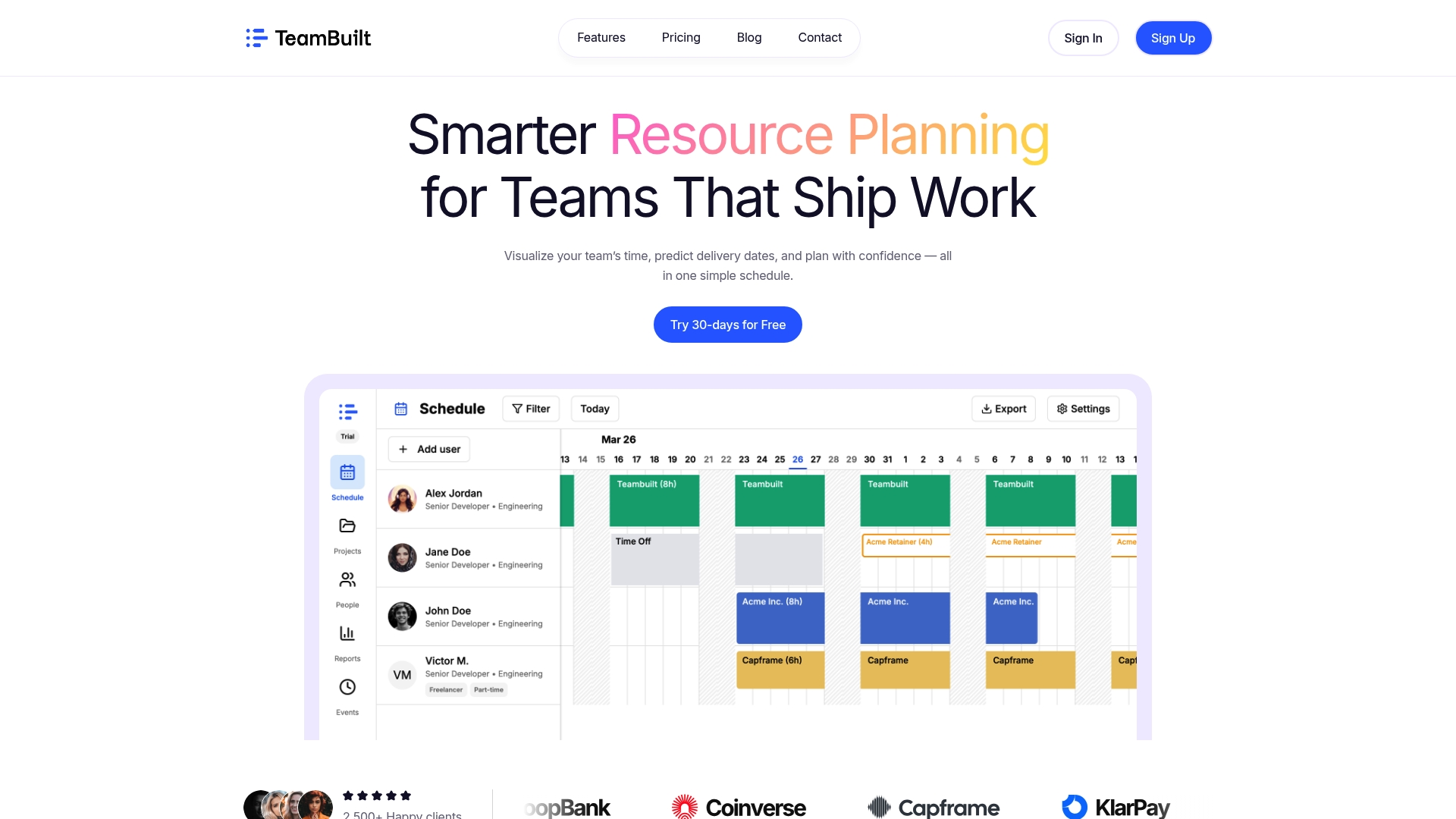
Teambuilt gives project managers and team leaders a centralized view of milestones, resource availability, and delivery timelines in one place. You can align high-level milestone gates with detailed team schedules, forecast delivery dates based on actual capacity, and give every stakeholder the right level of visibility without building separate reports by hand. If your team is managing multiple projects with overlapping timelines, Teambuilt’s project management platform replaces the spreadsheets and disconnected tools that make milestone tracking harder than it needs to be.
FAQ
What is a project milestone?
A project milestone is a zero-duration checkpoint that marks a significant achievement or decision point in a project timeline. It has no duration and is typically shown as a diamond on a Gantt chart.
How many milestones should a project have?
Most projects benefit from five to twelve key milestones focused on the critical path. More than that creates monitoring noise and dilutes the signal that milestones are designed to provide.
What is the difference between a milestone and a deliverable?
A deliverable is a tangible output, such as a design document or test report. A milestone is the moment that deliverable is formally accepted or approved, marking a confirmed step forward in the project.
How do Agile teams use milestones differently?
Agile teams focus milestones on sprint goals, iteration completions, and release tracks rather than phase gates. The cadence is shorter and the milestones reflect iterative delivery rather than sequential approvals.
Why do projects with milestones perform better?
Projects with clearly defined milestones have completion rates approximately 20% higher than those without. Milestones create accountability, improve stakeholder communication, and provide early warning when the schedule is at risk.
Recommended