
Key project management terms for efficient team planning


TL;DR:
- Clear project terminology prevents miscommunication and project delays in teams.
- Consistent use of core terms like milestone and baseline improves planning and accountability.
- Embedding vocabulary into workflows and tools boosts project success for SMB teams.
Misreading a single project management term can quietly derail your entire delivery schedule. When one person defines “milestone” as a check-in meeting and another treats it as a hard deliverable deadline, you have a coordination problem that no amount of follow-up emails will fix. For startups and SMBs running lean teams across multiple projects, this kind of language gap is more common than most managers admit. The PMI Lexicon of Project Management Terms defines dozens of core terms precisely because ambiguity at the vocabulary level creates chaos at the execution level. This guide cuts through that ambiguity.
Table of Contents
- Why project management terms matter for your business
- Essential project management terms every team should know
- Applying key terms to real project workflows
- Agile, Waterfall, or hybrid? Matching methodology and terms to team needs
- What most teams miss: Beyond buzzwords to real impact
- Take your project management to the next level
- Frequently asked questions
Key Takeaways
| Point | Details |
|---|---|
| Clear terms, better teams | When everyone uses the same project management language, teams work faster and smarter. |
| Context trumps jargon | Applying terms in real situations matters more than just knowing definitions. |
| Hybrid vocab is mainstream | Most SMBs use a mix of terms from Agile and Waterfall to fit their workflows. |
| Visual tools boost clarity | Gantt charts and Kanban boards make terms like ‘milestone’ and ‘critical path’ easy to grasp. |
Why project management terms matter for your business
Think about the last time a project slipped. Was it really a resource problem, or was it a communication problem disguised as one? Most teams assume missed deadlines come from not having enough people or time. The more common culprit is that team members were working from different definitions of the same words.
When your developers understand “baseline” as the original project plan and your stakeholders treat it as the current approved version, you get misaligned expectations before a single line of code is written. When “milestone” means different things to your design team and your client, you end up celebrating progress that the client doesn’t recognize as meaningful. These are not edge cases. They are everyday friction points in growing organizations.

Project failure often stems from poor term definition and unclear sponsorship, not just flawed methodology. That finding should reshape how you run kickoff meetings. Before you assign tasks or set deadlines, your team needs a shared vocabulary. Without it, even the best project plan becomes a game of telephone.
Here is what poor terminology alignment actually costs your team:
- Scope creep sneaks in when “deliverable” is never clearly defined, and stakeholders keep adding “small” requests that fall outside the original plan.
- Unclear accountability happens when nobody agrees on what “responsible” means versus “accountable,” so tasks fall through the cracks.
- Missed deadlines follow when “milestone” is treated as a suggestion rather than a fixed checkpoint tied to resource planning.
- Wasted capacity occurs when teams spend time on work that doesn’t match the approved baseline because nobody confirmed what that baseline included.
“The language you use in project planning is not just administrative. It is the architecture of how your team thinks about work, time, and responsibility.”
For growing teams, the stakes are especially high. You are often running multiple projects simultaneously with shared resources, meaning one misunderstood term in one project can cascade into delays across others. Following delivery best practices for SMBs starts with ensuring your team speaks the same language before the work begins.
Now that you know what’s at stake, let’s clarify which terms you can’t afford to use loosely.
Essential project management terms every team should know
The PMI Lexicon defines core terms including acceptance criteria, backlog, critical path, milestone, and WBS as foundational vocabulary for any project team. These are not just industry jargon. They are precise tools that, when used correctly, give your team a shared mental model for planning, execution, and delivery.
Here is a quick-reference table covering the terms your team needs to internalize:
| Term | What it means | Why it matters |
|---|---|---|
| Acceptance criteria | Conditions a deliverable must meet to be approved | Prevents endless revision cycles |
| Backlog | Prioritized list of work items not yet scheduled | Keeps future work visible and organized |
| Baseline | Approved version of scope, schedule, or cost | Provides a reference point for measuring change |
| Critical path | Longest sequence of dependent tasks | Directly determines your project end date |
| Milestone | Significant checkpoint or event in the project | Marks measurable progress for stakeholders |
| RACI matrix | Responsibility assignment tool (Responsible, Accountable, Consulted, Informed) | Eliminates role confusion |
| Risk | Uncertain event that could affect project outcomes | Allows proactive rather than reactive planning |
| Scope | Total work required to deliver the project | Defines what is and is not included |
| Sprint | Short, time-boxed work iteration (common in Agile) | Creates predictable delivery rhythms |
| Stakeholder | Anyone who affects or is affected by the project | Ensures the right people are informed |
| WBS | Work Breakdown Structure; hierarchical decomposition of project work | Makes large projects manageable |
Each of these terms carries operational weight. Acceptance criteria, for example, are not just a formality. They are the contract between your team and your client about what “done” actually looks like. When you skip defining them at the start, you open the door to subjective judgment calls at the end, which is where most client disputes live.

The RACI matrix is another term that teams often know but rarely use well. Listing someone as “Responsible” when they should be “Accountable” creates a situation where the person doing the work has no real decision-making authority. That leads to bottlenecks and frustration on both sides.
Using a timeline management guide alongside these definitions helps teams translate vocabulary into actual schedule structures that everyone can follow.
Pro Tip: Make your meeting agendas actionable by referencing specific milestones and deliverables by name. Instead of “discuss project progress,” write “review acceptance criteria for the homepage redesign milestone.” This one habit alone will sharpen your team’s focus and reduce meeting time significantly.
Applying key terms to real project workflows
With the stakes clear, here is what your team needs to be on the same page about when moving from vocabulary to execution. Knowing the terms is step one. Applying them consistently in your actual workflows is where the real efficiency gains happen.
Let’s walk through a realistic example: a product team preparing for a software feature release.
-
Define the scope first. Before any work begins, document exactly what is included in the release. Use the WBS to break the feature into smaller, manageable components. This gives every team member a clear view of their responsibilities and prevents scope creep from the start.
-
Build the backlog. List all tasks required to complete the feature. Prioritize them based on dependencies and business value. A well-maintained backlog means your team always knows what to work on next, even when priorities shift.
-
Map the critical path. Identify which tasks are dependent on each other and which sequence of tasks will take the longest. Visual tools like Gantt charts help SMBs manage deliverables using terms like critical path and milestones. If your design work cannot start until the requirements are approved, that dependency belongs on the critical path.
-
Set milestones with acceptance criteria. Identify three to five key checkpoints in the project. For each one, write clear acceptance criteria so everyone knows exactly what needs to be true before you move forward. This is especially important for client-facing milestones.
-
Assign roles using a RACI matrix. For each major deliverable, document who is Responsible, who is Accountable, who needs to be Consulted, and who should be Informed. Share this matrix with the full team at kickoff and update it when roles change.
-
Run sprints against the backlog. If your team works in Agile, use two-week sprints to pull work from the backlog in priority order. Each sprint should end with a reviewable output tied to at least one milestone.
-
Track against the baseline. Once the plan is approved, lock the baseline. Any changes to scope, schedule, or budget should go through a formal change process so you always know how far you have drifted from the original plan.
Common pitfalls to avoid: skipping acceptance criteria because they feel time-consuming, treating the backlog as a static list rather than a living document, and confusing milestones with task completion. These shortcuts create confusion later and make it harder to forecast delivery dates accurately.
For smarter workflow examples that put these terms into practice, look at how high-performing SMB teams structure their planning cycles. And if scheduling is a recurring pain point, efficient team scheduling approaches can help you align resource availability with your critical path in real time.
Pro Tip: Document the critical path and share it visually in every project standup. When the whole team can see which tasks are on the critical path, they naturally prioritize work that protects the deadline and flag risks earlier.
Agile, Waterfall, or hybrid? Matching methodology and terms to team needs
Depending on your team’s needs and culture, project management vocabulary adapts to different approaches. The same word can mean something slightly different depending on whether your team runs Agile sprints, follows a Waterfall sequence, or uses a hybrid of both. Understanding how terms shift across methodologies prevents confusion when teams collaborate across departments with different working styles.
Here is a side-by-side comparison of how key terms translate across the three main approaches:
| Term | Agile | Waterfall | Hybrid |
|---|---|---|---|
| Backlog | Central to planning; continuously refined | Not commonly used; replaced by requirements doc | Used for flexible work streams within fixed phases |
| Milestone | End of sprint or release | Fixed gate between project phases | Mix of sprint reviews and phase gates |
| Baseline | Reset each sprint or release cycle | Set once at project start; tightly controlled | Set at phase level; adjusted at sprint level |
| Sprint | Core work unit (1 to 4 weeks) | Not applicable | Used for iterative components within a larger plan |
| Risk | Managed continuously in backlog | Documented in risk register upfront | Combination of both approaches |
Pure Agile suits innovation, Waterfall works well for compliance-heavy projects, and hybrid is increasingly mainstream. But success depends more on how clearly terms and definitions are communicated than on the methodology label itself. A team that uses Agile vocabulary inconsistently will underperform a team that runs a simple Waterfall plan with crystal-clear definitions every time.
Best practices for integrating hybrid vocabulary into team meetings:
- Agree on definitions at kickoff. Before the first sprint or phase begins, walk the team through the specific terms you will use and what they mean in your context.
- Create a shared glossary. Even a simple shared document with ten to fifteen key terms and their definitions for your specific project reduces confusion significantly.
- Align terminology with your reporting cadence. If leadership expects milestone updates, make sure your Agile team understands which sprint reviews map to which milestones.
- Revisit definitions when teams merge. When a marketing team and an engineering team collaborate on the same project, their default vocabularies often clash. Surface those differences early.
Exploring hybrid methodologies for teams and learning from multi-team management tips can help you build a consistent language framework that works regardless of which methodology your team prefers.
The bottom line is that clarity in definition matters more than which methodology you choose. A well-defined Waterfall plan beats a poorly communicated Agile setup every time.
What most teams miss: Beyond buzzwords to real impact
Here is the uncomfortable truth most project management guides skip: knowing the right terms does not automatically improve your projects. We have seen teams that can recite every PMI definition but still miss deadlines, misallocate resources, and frustrate stakeholders. Vocabulary is a tool, not a solution.
The difference between teams that use terminology as decoration and teams that use it as infrastructure is consistency. When “critical path” only comes up in kickoff presentations and never again in standups, it is just a buzzword. When it is referenced daily, tied to specific tasks, and used to make real prioritization decisions, it becomes a management asset.
Teams boost success threefold by blending business acumen with clear project terminology, not tools alone. That finding points to something important: the context in which you use terms matters as much as the terms themselves. A RACI matrix that sits in a project folder nobody opens does nothing. A RACI matrix that is reviewed in every sprint planning session and updated when responsibilities shift is a living accountability tool.
Embed your project vocabulary into your KPIs, your standup questions, your retrospective formats, and your stakeholder reports. When your team hears “are we tracking to the baseline?” in every weekly review, that question becomes a reflex, not a chore. Following a scalable project workflow guide can show you exactly how to build that kind of consistency into your team’s operating rhythm.
Take your project management to the next level
Ready to put this terminology to work? Understanding the vocabulary is only half the equation. The other half is having a platform that makes these concepts visible, actionable, and collaborative across your entire team.
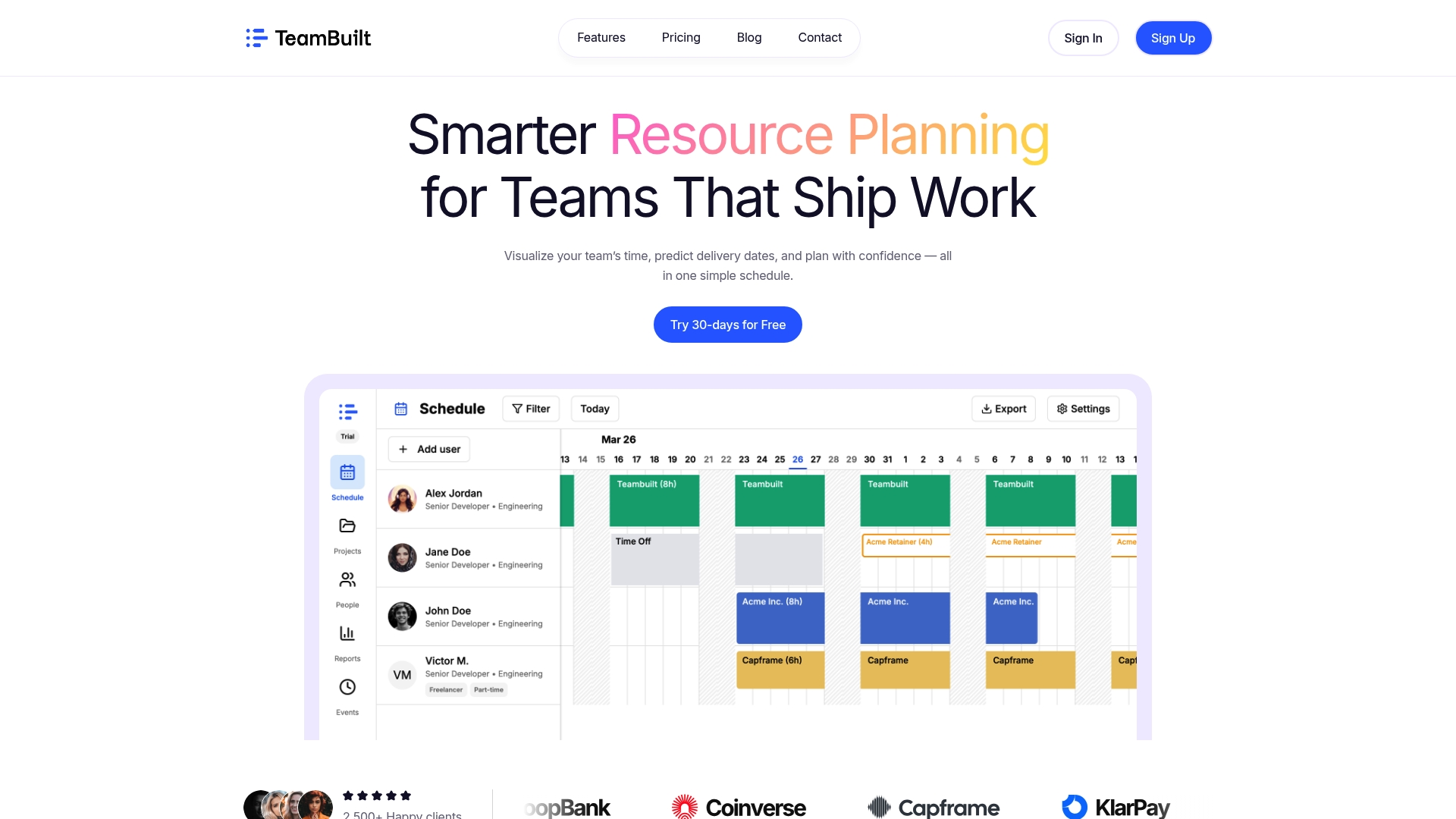
TeamBuilt brings the terms and tools referenced throughout this guide into one centralized platform built for growing teams. You can visualize your critical path, track baselines against current progress, manage backlogs across multiple projects, and assign roles with clarity. The team management features are designed specifically for SMBs and agencies that need real-time visibility into capacity and delivery timelines without the complexity of enterprise software. Replace your scattered spreadsheets with a workspace where your project management vocabulary actually drives decisions.
Frequently asked questions
What is the most important project management term for SMBs?
The critical path is often the most important term, as it identifies the longest sequence of dependent tasks that directly impacts project timelines. Any delay on the critical path automatically delays the entire project end date.
How does a Gantt chart help manage projects?
A Gantt chart visually maps tasks and dependencies against a timeline, making it easy to spot scheduling conflicts and adjust workloads before they become bottlenecks.
Why do project management methodologies use different terms?
Agile, Waterfall, and hybrid approaches each emphasize different processes, so terms like backlog or sprint have unique roles per methodology that reflect how work is planned, executed, and reviewed within each framework.
What’s the advantage of a RACI matrix?
A RACI matrix clarifies role assignments by defining who is Responsible, Accountable, Consulted, and Informed for every deliverable, which eliminates the ambiguity that leads to dropped tasks and duplicated effort.
Recommended