
Agency project workflows: A guide for scalable success



TL;DR:
- Most agencies fail at workflow success due to unshared process definitions rather than tools or staff.
- Clear role separation, standardized briefs, and automation with human oversight are key to predictability.
- Most effective are hybrid methodologies, standardized steps, and SaaS/AI tools combined with a strong culture of documentation and retrospection.
Most agencies assume their workflow problems stem from the wrong tools or the wrong people. The real issue is usually something simpler: no shared definition of how work actually moves. Agencies overwhelmingly blend methodologies rather than following a single playbook, which means your team may be running three different systems without realizing it. This guide breaks down the core workflow types, the steps that matter most, how modern SaaS tools fit in, and the pitfalls that quietly derail even experienced teams. Whether you’re managing a five-person shop or a 50-person agency, clarity here is what separates reactive chaos from predictable delivery.
Table of Contents
- Understanding agency project workflow essentials
- Comparing project management methodologies for agencies
- Optimizing workflow steps: From intake to delivery
- Enabling scalable workflows with SaaS and AI
- Why most agencies struggle and what actually works
- Ready to streamline your agency workflows?
- Frequently asked questions
Key Takeaways
| Point | Details |
|---|---|
| No one-size-fits-all workflow | Successful agencies blend methodologies to fit the project, not the other way around. |
| Standardization plus human oversight | Automated tools are powerful, but regular check-ins and retrospectives are what make workflows thrive. |
| Document processes for scale | Recording clear steps, roles, and escalation ladders helps teams avoid chaos as they grow. |
| Culture drives transformation | Lasting workflow improvement comes when teams are bought in, not just using new tools. |
Understanding agency project workflow essentials
An agency project workflow is the sequence of steps that moves a project from the first client conversation through final delivery. Sounds simple. In practice, it’s where most operational breakdowns happen, because the sequence exists in people’s heads rather than in a shared system.
The first thing to formalize is role separation. Many growing agencies blur the line between project managers, traffic managers, and creative leads. These are distinct functions. A traffic manager controls resource allocation and scheduling. A project manager owns scope, timeline, and client communication. Creatives execute. When one person tries to do all three, something always slips.

Once roles are clear, you need a way to monitor work in motion. A simple traffic light status system works well: green means on track, yellow means at risk, red means blocked and escalating. This gives your team a shared language for surfacing problems without requiring long status meetings.
A few essentials every agency workflow should include:
- Standardized project briefs completed before any work begins
- Clear handoff points between roles with documented sign-off requirements
- Escalation ladders that define who gets looped in when something goes red
- Retrospective meetings after each project to capture what worked and what didn’t
- Human verification checkpoints in any AI-assisted workflow step
“Separating traffic management from project management is not a luxury for large agencies. It’s a structural necessity for any team handling more than a handful of concurrent projects.”
Building these agency workflow fundamentals into your operating model early prevents the kind of missed handoffs and scope creep that erode margins and client trust over time. The goal is not bureaucracy. It’s predictability.
Comparing project management methodologies for agencies
Choosing a methodology is not about picking the most popular framework. It’s about matching your process to the nature of the work.
Waterfall (also called predictive or sequential) works by locking in scope upfront and moving through phases in order: discovery, strategy, design, production, delivery. It’s reliable for projects with fixed deliverables and little expected change, like a large brand identity project or a print campaign.
Agile breaks work into short cycles called sprints, with frequent client feedback and room to pivot. It suits rapid creative iteration, product launches, or digital campaigns where the direction evolves.
Hybrid blends both. You might use a waterfall structure for the overall project timeline while running agile sprints within the execution phase. 31.5% of agencies now use hybrid methodologies, compared to 43.9% predictive and 24.6% agile, which tells you most teams are already mixing approaches whether they label it that way or not.
| Methodology | Best for | Pros | Cons |
|---|---|---|---|
| Waterfall | Brand campaigns, fixed-scope projects | Clear milestones, easy to budget | Inflexible to change |
| Agile | Digital products, iterative campaigns | Fast feedback, adaptable | Harder to scope and price |
| Hybrid | Content marketing, multi-phase projects | Balanced structure and flexibility | Requires strong PM discipline |
For a practical look at how these play out in real projects, website design workflow examples show how agencies apply sequential and iterative phases depending on client needs.
Pro Tip: If you’re unsure which model fits your agency, default to hybrid. It gives you the scheduling predictability of waterfall with the adaptability of agile, and it maps well to how most client relationships actually evolve. You can always tighten or loosen the structure based on project type using a workflow methodologies comparison to guide your team.
Optimizing workflow steps: From intake to delivery
Picking a methodology is step one. Operationalizing it with documented steps is where the real work happens.

For growing agencies, capacity planning and standardized briefs are the two highest-leverage investments you can make. Hitting 70 to 75% team utilization without burning people out requires knowing what’s coming before it arrives, and that starts at intake.
Here is a practical eight-step workflow that applies across most agency project types:
- Intake and brief — Client completes a standardized brief. PM reviews for completeness before accepting.
- Capacity check — Traffic manager confirms team availability and flags conflicts before kickoff is scheduled.
- Kickoff meeting — Align on scope, timeline, deliverables, and communication cadence with all stakeholders.
- Execution — Creative team works within defined sprints or phases. Status updated in real time.
- Internal review — PM and creative lead review work before it reaches the client.
- Client review and feedback — Structured feedback round with a defined revision limit.
- QA and final delivery — Quality check against the original brief before files are sent.
- Retrospective — Team reviews what worked, what didn’t, and what to change next time.
| Step | Primary owner | Key output |
|---|---|---|
| Intake and brief | Project manager | Approved brief |
| Capacity check | Traffic manager | Resource plan |
| Kickoff | PM and client | Aligned timeline |
| Execution | Creative team | Drafts and assets |
| Internal review | PM and creative lead | Revision notes |
| Client review | Client | Approved feedback |
| QA and delivery | PM | Final files |
| Retrospective | Full team | Process improvements |
For more complex projects, enterprise workflow steps add governance layers and approval chains that larger teams or regulated clients may require.
Pro Tip: Use a SaaS platform that triggers automatic handoff notifications when one step closes and the next opens. This eliminates the “I thought you had it” conversations that waste hours every week and keeps your standard agency processes running without manual follow-up.
Enabling scalable workflows with SaaS and AI
As your agency takes on more clients and more concurrent projects, manual coordination stops scaling. A project manager can track ten projects in a spreadsheet. Tracking thirty across multiple teams requires a different approach.
SaaS platforms and AI tools offer real benefits here. The most impactful ones include:
- Automated reminders and deadline alerts that reduce missed handoffs without requiring a PM to chase every update
- Real-time status dashboards so leadership sees project health across the portfolio at a glance
- Cross-team visibility into who is working on what, preventing the double-booking that burns out your best people
- Capacity forecasting that flags overload before it becomes a delivery problem
- Integrated documentation so briefs, feedback, and approvals live in one place
AI is changing what’s possible in professional services workflows, particularly for automating status updates, generating first-draft content, and flagging schedule risks. Traditional human-led agency margins run 60 to 80%, while AI-assisted workflows can compress costs to 15 to 25% margins in some areas. That’s a significant shift.
But the risk is real too. Over-automating without human judgment leads to errors that damage client relationships. AI can hallucinate details in briefs, misinterpret feedback, or trigger the wrong workflow stage.
“AI is transformative for agency operations, but human QA is not optional. Every automated step that touches client-facing output needs a person in the loop.”
The smartest approach is to use SaaS and AI for agencies to handle the coordination and documentation overhead, while keeping humans responsible for judgment calls, client communication, and quality review. Red and yellow status flags should trigger human escalation, not just another automated reminder.
Why most agencies struggle and what actually works
Here’s the uncomfortable reality: most agencies that fail at workflow transformation don’t fail because they picked the wrong methodology. They fail because they adopted a tool halfway, skipped the retrospectives when things got busy, or assumed that buying software would fix a culture problem.
We’ve seen agencies invest in sophisticated SaaS platforms and still run projects out of email threads because nobody took the time to document the actual process or train the team on why it matters. The tool becomes shelfware.
What actually works is less glamorous than any software demo. It’s consistent documentation of how work moves. It’s retrospectives that happen even when the team is stretched. It’s a traffic manager who has real authority to push back on intake when capacity is full. And it’s leadership that treats real-world workflow lessons as a competitive advantage rather than administrative overhead.
Standardization and flexibility are not opposites. The agencies that scale well hold their process structure firmly while giving teams room to adapt within it. Agency culture is, ultimately, the most powerful workflow automation you have.
Ready to streamline your agency workflows?
Putting these principles into practice is easier when your tools are built for the way agencies actually work. TeamBuilt gives project managers and operations leads a single platform for real-time scheduling, capacity planning, and cross-team visibility, so nothing falls through the cracks between intake and delivery.
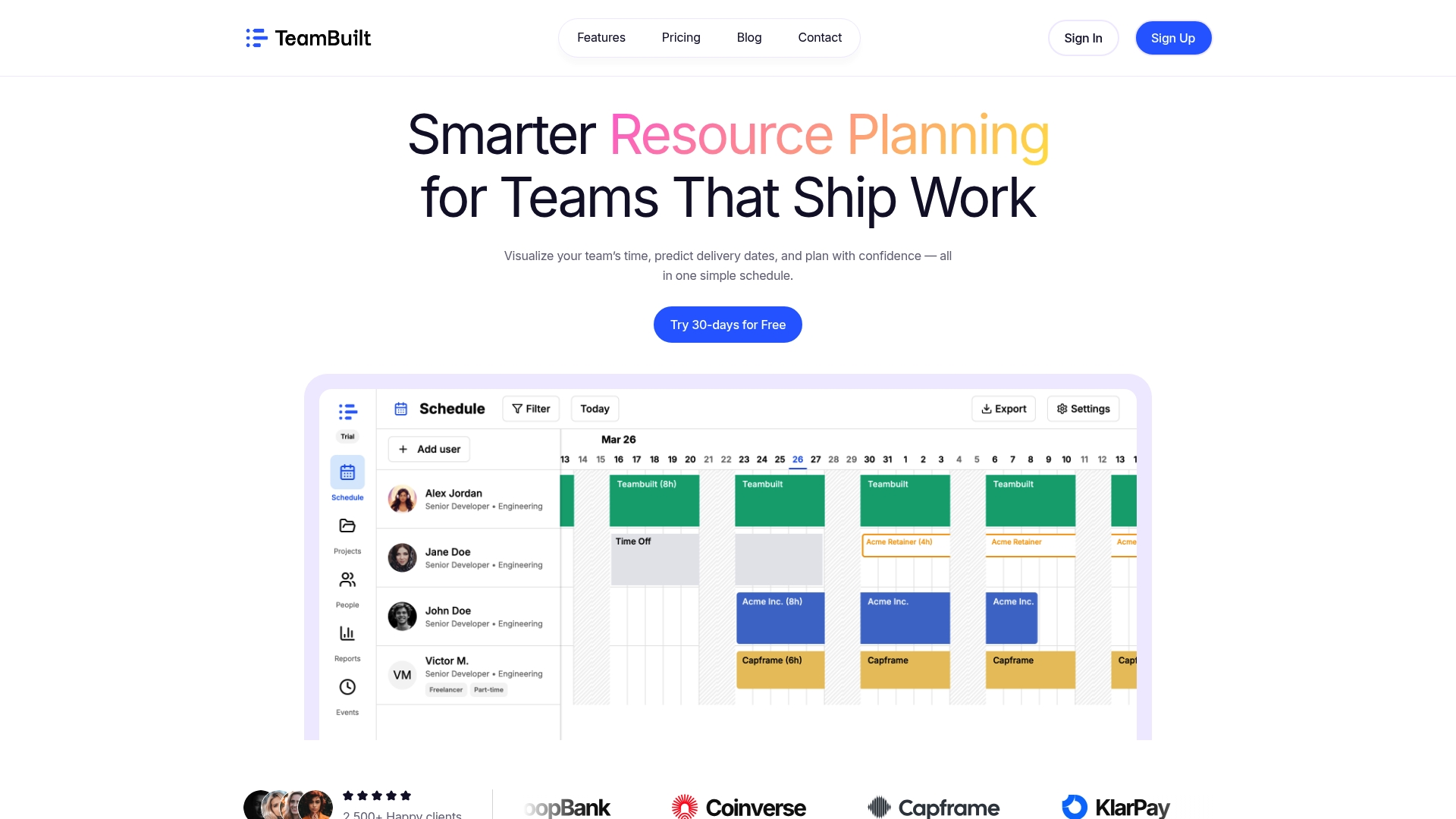
With Trackio for agencies, you get automated handoff tracking, workload visualization, and forecasting that keeps your team at the right utilization level without burning anyone out. If your current workflow lives in spreadsheets and scattered email threads, this is the practical next step toward predictable, scalable delivery your clients will notice.
Frequently asked questions
What are the most effective workflow models for creative agencies?
Hybrid models blending sequential and agile processes are most effective because 31.5% of agencies already use them to balance structure with creative flexibility.
How can agencies avoid workflow bottlenecks?
Standardizing intake briefs, applying traffic light status to active projects, and holding regular retrospectives catch bottlenecks before they stall delivery.
Should agencies automate all project workflow steps?
No. Automation handles coordination and reminders well, but human QA remains essential for client-facing outputs, feedback reviews, and any step where judgment matters.
Why do agencies still struggle despite using SaaS tools?
Poor documentation discipline, weak feedback loops, and ignoring team culture are the root causes. Tools only work when the underlying process is defined and consistently followed.
Recommended