
Top project management tools for SMB teams: 6 picks



TL;DR:
- Selecting the right SMB project management tool depends on workflow fit, usability, and integration capabilities.
- Popular options include ClickUp for all-in-one features, Trello for simplicity, and Jira for Agile development.
- Prioritize trial runs with actual projects to identify team friction and ensure proper tool adoption.
Picking the right project management tool for your SMB feels like shopping for a car when every salesperson insists theirs is the fastest, cheapest, and easiest to drive. The market is packed with options, pricing models are all over the place, and your team’s patience for learning new software is limited. One wrong choice means wasted budget, frustrated staff, and projects that still slip. This guide cuts through the noise by comparing six leading platforms on features, pricing, and real-world fit, so you can make a confident decision without running a months-long evaluation.
Table of Contents
- How to evaluate project management tools for SMBs
- Top project management tool examples: Features, strengths, and trade-offs
- Comparison table: Which tool fits your team’s needs?
- Situational recommendations: Best tools for common SMB scenarios
- Why the best tool isn’t always the most feature-packed: An SMB perspective
- Explore resource planning tools built for SMB project success
- Frequently asked questions
Key Takeaways
| Point | Details |
|---|---|
| Match tools to needs | Choose a project management tool based on your team’s workflow complexity and adoption, not just the features list. |
| Visual options boost adoption | Tools with visual boards like monday.com and Trello typically see higher user adoption in SMB teams. |
| Cost differences add up | Annual savings per user can be substantial—compare price per user and total value for your team size. |
| Test before you commit | Always pilot shortlisted tools with your actual projects before large-scale rollout. |
How to evaluate project management tools for SMBs
The landscape of project management software runs from dead-simple Kanban boards to platforms that rival enterprise resource planning systems. That range is useful, but it also makes comparison exhausting. Before you look at any specific tool, build a short evaluation checklist that anchors every decision to your team’s actual work.
Here are the criteria that matter most for SMB teams:
- Feature set: Does the tool support your methodology? Kanban, Gantt charts, and workflow automations are table stakes for most teams in 2026.
- Cost: Per-user pricing adds up fast. Know your headcount and calculate annual totals, not just monthly sticker prices.
- User-friendliness: A tool your team ignores is worthless. Visual and structured interfaces boost adoption in SMB environments, which is why platforms like ClickUp, monday.com, and Wrike consistently rank at the top.
- Integrations: Your project tool should talk to your calendar, Slack, and billing software without custom code.
- Reporting: If you can’t see workload distribution and delivery forecasts, you’re flying blind on resource decisions.
Free trials and freemium tiers make risk-free testing possible, and you should use them aggressively. The single most important step before signing any contract is mapping tool features to your project timeline management guide and your actual sprint or delivery cadence.
Pro Tip: Before your trial ends, run one real project through the tool, not a demo workflow. Real friction shows up fast when actual deadlines are involved.
If your team struggles with resource conflicts, also review your resource allocation workflow tips before finalizing a shortlist. The right tool should reinforce a healthy workflow, not paper over a broken one.
Top project management tool examples: Features, strengths, and trade-offs
Here’s an honest look at the six tools that dominate SMB conversations right now.
ClickUp is the closest thing to an all-in-one platform at an SMB price point. It supports Kanban, Gantt, list views, docs, time tracking, and goal management in one workspace. Rated 4.6 out of 5 by Forbes, it starts at $7 per user per month, making it exceptional value. The downside is a steep learning curve. Simple teams often feel overwhelmed by the sheer number of options.

monday.com shines for visual, collaborative workflows. It supports Kanban, Gantt, and automation starting at $9 per user per month and is particularly strong for cross-team coordination. The visual interface drives fast adoption, though costs can climb once you need advanced reporting.
Asana is built for structured task management and goal alignment. It handles subtasks, timelines, and Agile workflows at $10.99 per user per month. It’s a great fit for teams that need clear accountability chains, but it lacks native time tracking, which frustrates managers who need utilization data.
Trello is the simplest option on this list. Ideal for Kanban-first teams at $5 per user per month, it’s fast to learn and easy to love. The trade-off is limited depth. Once your projects get complex, Trello’s card-based system starts to feel like a sticky note wall.
Jira is purpose-built for software development. It supports sprints, backlogs, and Kanban at $7.75 per user per month and is the gold standard for Agile engineering teams. For non-technical teams, it’s overkill and often alienating.
Basecamp takes a different approach entirely. At a flat $15 per user per month, it prioritizes communication and simplicity over methodology. It’s best for small teams that want less complexity, not more.
“The right tool isn’t the one with the most features. It’s the one your team will actually open every morning.”
Pro Tip: Run a dummy project through your top two choices during the trial period. Watch where your team hesitates or asks for help. That friction is your answer.
For teams managing agency project workflows or looking to layer in workflow automation examples, ClickUp and monday.com offer the most flexibility without requiring developer resources.
Comparison table: Which tool fits your team’s needs?
With the top tools introduced, here’s a side-by-side comparison to help you narrow down choices quickly.
| Tool | Price (per user/month) | Best methodology | Learning curve | Best for | Weakness |
|---|---|---|---|---|---|
| ClickUp | $7 | Kanban, Gantt, Agile | High | All-in-one teams | Overwhelming for simple use |
| monday.com | $9 | Kanban, Gantt | Low | Visual, cross-team work | Cost at scale |
| Asana | $10.99 | Agile, task-based | Medium | Structured task management | No native time tracking |
| Trello | $5 | Kanban | Very low | Small, simple teams | Limited depth |
| Jira | $7.75 | Agile, Scrum | High | Dev/engineering teams | Poor for non-tech teams |
| Basecamp | $15 | Communication-first | Low | Small, comms-focused teams | Minimal reporting |
The cost difference between tools adds up significantly at scale. ClickUp saves roughly $479 per year for a 10-person team compared to Asana, a meaningful number for any SMB watching its software budget. Visual tools like monday.com and Trello also consistently show higher user adoption rates, which matters because a tool no one uses is a tool that costs money and delivers nothing.
When building your shortlist, let your workflow drive the decision. Teams that rely on centralized planning tools for cross-department visibility will get more from monday.com or ClickUp than from Trello. Teams that need real-time collaboration across remote locations should weight integration quality heavily.
Situational recommendations: Best tools for common SMB scenarios
Let’s get practical and match these tools to common SMB challenges, plus some watchouts to avoid costly missteps.
Best picks by scenario:
- Complex resource planning: ClickUp or monday.com. Both offer workload views and capacity tracking that help you avoid overloading team members.
- Visual-first teams: monday.com. Its drag-and-drop interface and color-coded boards make planning intuitive for non-technical staff.
- Task management only: Asana or Trello. If you don’t need resource forecasting, these are clean and focused.
- Agile software teams: Jira, without question. No other tool on this list handles sprint planning and backlog grooming as well.
- Communication-centric small teams: Basecamp. It removes clutter and keeps everyone in one conversation thread.
What to avoid:
- Don’t use Jira for non-developer teams. The interface and terminology assume software knowledge that most operations or marketing staff don’t have.
- Don’t pick ClickUp for simple workflows. The learning curve is steep and can slow down teams that just need a task list and a due date.
- Don’t choose Asana if time tracking is critical. Its lack of native time tracking means you’ll need a separate tool, which adds cost and friction.
“Mismatched tools don’t just waste money. They create the kind of team frustration that makes people revert to email chains and spreadsheets.”
Pro Tip: Pilot two or three tools in parallel with a small group for two weeks before any full rollout. You’ll surface deal breakers before they affect your entire team.
If you’re evaluating tools beyond this list, the project management alternatives guide covers additional platforms worth considering for specific SMB edge cases.
Why the best tool isn’t always the most feature-packed: An SMB perspective
Here’s something most tool comparison articles won’t tell you: the most common mistake SMB teams make isn’t picking the wrong features. It’s picking the tool with the most features and assuming that translates to better outcomes.
We’ve seen teams spend weeks configuring ClickUp’s custom fields and dashboard widgets, only to abandon the platform three months later because daily standup prep took longer than the standup itself. Meanwhile, a competitor running Trello with clear naming conventions shipped faster and with less confusion.
Feature-rich platforms like ClickUp versus simpler tools like Trello or Basecamp represent a genuine strategic choice, not just a preference. The right answer depends on your team’s technical comfort level and the actual complexity of your projects.
Cultural fit and adoption matter more than high-end features for most SMB teams. A tool your team resists using will underperform a simpler tool they embrace. Before you finalize any decision, run a buy-in check. Ask your team leads which interface felt natural during the trial. Their answer will tell you more than any feature comparison chart.
For agencies managing multiple client projects, scalable agency workflows often require a platform that balances structure with flexibility, not one that maximizes either extreme.
Explore resource planning tools built for SMB project success
Ready to put these insights into action? Here’s where to start.
If you’ve worked through this comparison and realized your team needs more than task management, specifically real-time visibility into who’s working on what and when projects will actually land, TeamBuilt was built for exactly that.
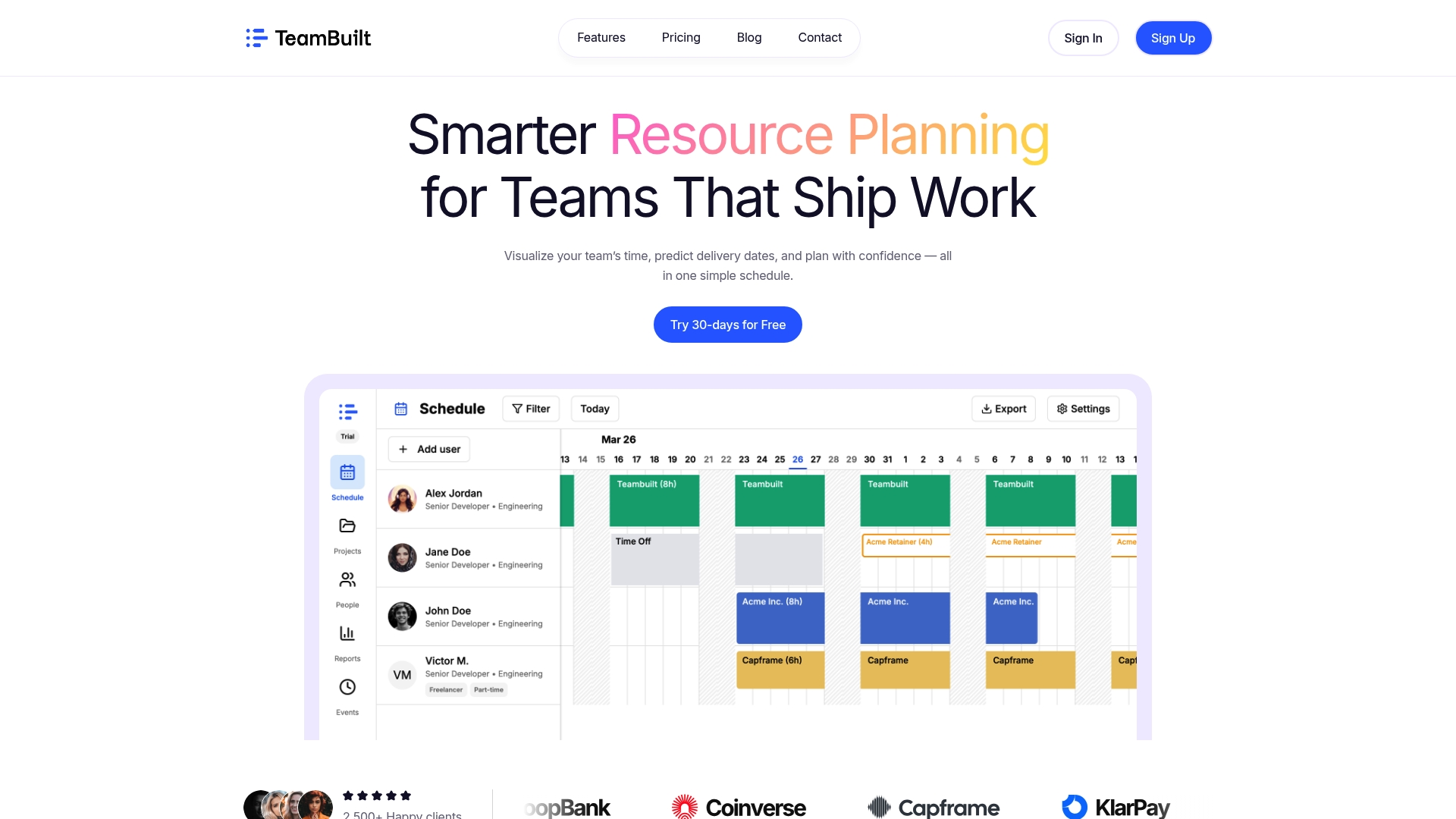
TeamBuilt’s features include visual workload scheduling, capacity tracking, and delivery forecasting designed for SMBs managing multiple teams. There’s no spreadsheet juggling or tab-switching between five tools. The TeamBuilt platform gives project managers and team leads a single view of resource availability, project timelines, and team utilization. Explore a trial and see how much clearer your planning decisions become when your entire team’s capacity is visible in one place.
Frequently asked questions
What are the most affordable project management tools for small teams?
Trello at $5 and ClickUp at $7 per user per month are the most budget-friendly options, offering solid functionality without heavy financial commitment for small teams.
Which tool is best for Agile software teams?
Jira is the clear choice, built specifically for Agile and Scrum with native sprint and backlog support that no other tool on this list matches for development workflows.
How can I test project management tools before committing?
Most leading platforms including ClickUp, monday.com, and Asana offer free tiers for testing, so you can run real workflows before paying a cent.
What’s the biggest mistake SMBs make when picking project management software?
Choosing the tool with the longest feature list rather than the one that fits actual team workflows. Feature-rich versus simple tools is a real trade-off, and simpler often wins when team adoption is the priority.
Recommended